The question «Do we need an AI policy?» rarely comes out of nowhere. It comes after a concrete moment. Someone in sales pasted a customer quote into ChatGPT to have it rephrased. Or HR noticed that a job interview was transcribed by a tool nobody ever vetted.
The moment is uncomfortable. But it is useful, because it shows that the question is being asked the wrong way round.
The right way round, it reads: AI is in use at your company, probably has been for months. Do you want a say in how?
The policy arrives after the reality
In our experience, part of the workforce in most SMEs uses AI tools long before management puts the topic on the table: private ChatGPT accounts, translation services, transcription apps in meetings, browser extensions that «help with writing». None of it was ever introduced. It was simply there at some point.
The sentence we hear most often about this in first conversations is: «AI is not a topic for us yet.» It is almost never true. What it means is: management has not yet decided to introduce AI. But the introduction did not wait for them. If you look, you find the traces quickly, in the installed browser extensions, in expense reports with small software subscriptions, in meeting minutes that are suddenly suspiciously well formatted.
This is not malice. Your people want to work faster, and the tools help them do it. Shadow AI grows where answers are missing: Am I allowed to do this? With which data? And who do I ask if I do not know?
As long as those answers are missing, every employee answers the questions alone, every day, at their own discretion. Some decide cautiously, some pragmatically, some not at all. The result is not a catastrophe, but it is flying blind: hardly anyone in the company can say which company data sits with which provider.
The reflex that often follows is the ban. It feels like control and is the opposite of it. The usage does not disappear, it moves to the private phone, out of the company network and out of your sight. A blanket ban trades visibility for a good feeling.
What the law requires, and what it does not
A quick look at the legal situation, because the question often arrives wrapped in compliance worry.
Switzerland has no AI law of its own. In February 2025 the Federal Council decided against a framework law: instead it wants to ratify the Council of Europe's AI convention and adapt the law where sector-specific changes are needed, for example in healthcare or transport. The convention itself is aimed primarily at state actors. Translated, this means: there is no obligation for an SME to have an AI policy, and none is on the horizon.
Two things apply nonetheless. First, the Swiss data protection act (nDSG): it makes no difference whether personal data is processed in a spreadsheet or in an AI tool. Anyone handing customer data to a provider needs a legal basis and, as a rule, a data processing agreement, regardless of how clever the tool is. An employee's private free account does not meet that requirement. Second, the EU AI Act: it reaches beyond the EU. If your company offers or uses AI systems whose output is used in the EU, it can apply to you, even with your registered office in Zug or St. Gallen.
So the reason for an AI policy is not the regulator. The reason is operational: without one, every single person in your company decides alone which data they entrust to which provider. That is the real exposure, and it grows with every new tool.
The four questions an AI policy must answer
An AI policy is not a legal document. It is a working instruction, and a short one. It must answer four questions, in language your people can understand without a law degree.
1. Which data may go into which tools?
This is the core, and it only works with a minimal data classification. Three levels are enough to start: public, internal, confidential. Public content may go into any approved tool. Internal content only into tools with a company contract. Confidential material, meaning customer data, personnel data, prices, contracts, into none of them without explicit approval. Without this distinction, every AI rule is a gut feeling.
It matters that the levels are anchored in examples your people know from their daily work. «Confidential» stays abstract, «the quote for customer X, the employment contract, the payroll list» is understood instantly by everyone in the company. The classification does not need its own project, it needs half a page with examples.
2. Which tools are approved, and where do they run?
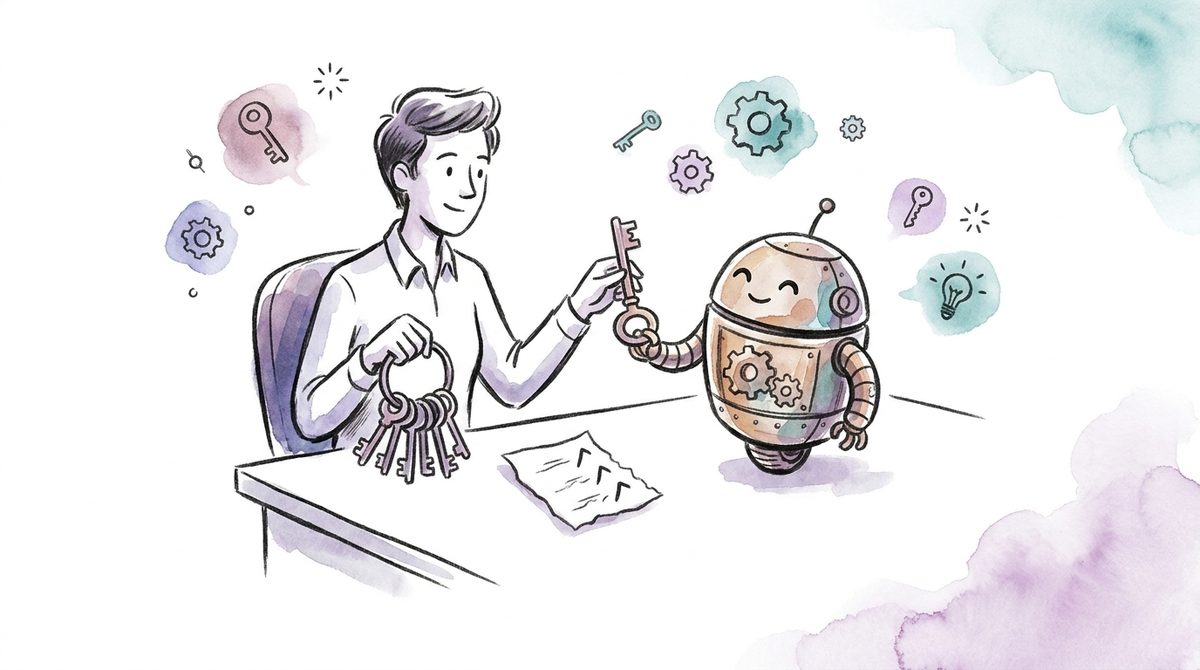
A short list, nothing more. It answers one question above all: does the tool run on a private free account or on a company contract with a data processing agreement? The private ChatGPT account and the company tenant look almost identical to the user, legally and in terms of data they are worlds apart. And if you have tools like Copilot in the house: the real work is not the licence but the permissions behind it.
3. Who is responsible for the output?
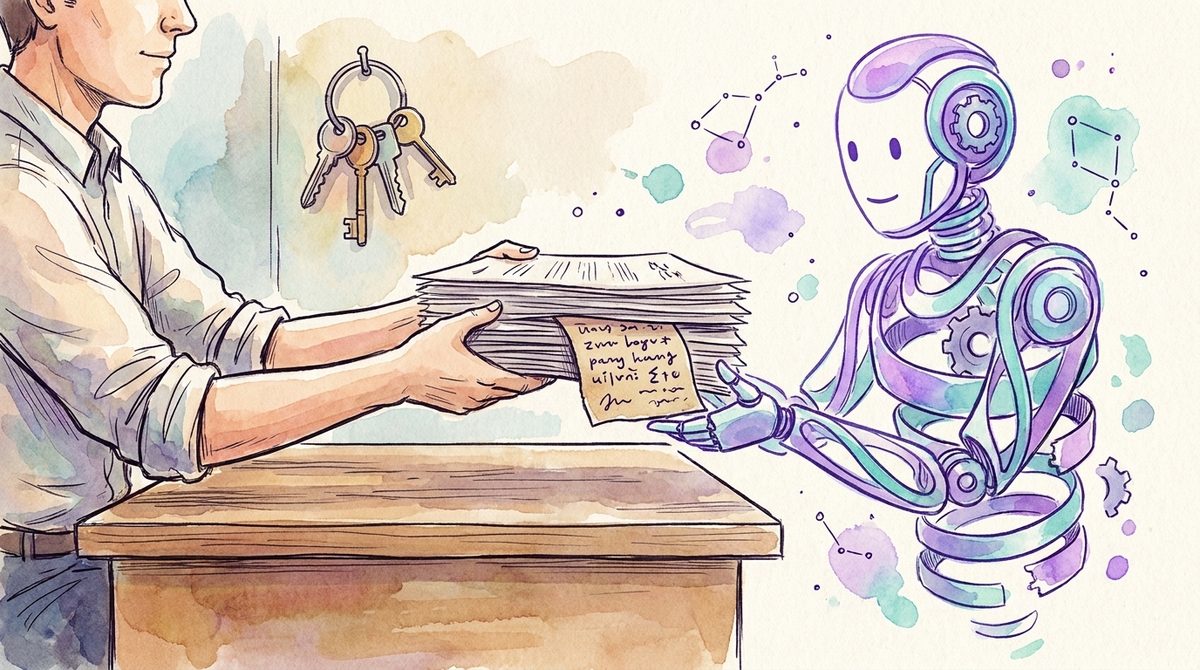
The simplest and most frequently skipped rule: AI results are drafts. Responsibility stays with whoever sends them, publishes them or decides based on them. The quote with the wrong price, the candidate feedback with the awkward wording, the hallucinated source in the report: the excuse «the AI wrote that» does not exist. Writing this down once clearly saves you the most tedious discussion later.
The rule works in both directions, by the way. It also protects the employees who use the tools well: whoever checks the output and stands behind it does not have to justify using AI. That takes the secrecy out of the topic, and the secrecy is the risk.
4. How do new tools get added?
The point almost all policies forget, and the one that decides whether they survive. The tool market changes faster than any document. If the official route to a new tool takes weeks or does not exist, the private account wins, and you are back to flying blind. You need a simple path to yes: one person who answers requests within days, with clear criteria instead of case-by-case gut feeling.
The criteria are allowed to be mundane, as long as they are written down: Where does the provider process the data? Is there a company contract with data processing terms? Can your inputs be excluded from model training? What does it cost, and does it replace something you already have? That is fifteen minutes of review per tool, not a procurement process with a meeting cadence.
Where AI policies fail
In practice we keep seeing the same three patterns, across industries and company sizes.
The lawyer's document: 20 pages, cleanly drafted, legally watertight, unread. A policy nobody reads protects exactly nothing. It only creates the feeling that the topic is handled, and that is more dangerous than no policy at all, because nobody asks questions anymore.
The total ban: it feels decisive, but it produces exactly the shadow usage it was meant to prevent. The question is not whether your people use AI. The question is whether they do it where you can see it.
The copied template: a generic sample policy from the internet, adapted in the company name and nowhere else. It demands processes you do not have and mentions tools nobody uses. A simple test: if your AI policy could hang unchanged in the business next door, it regulates nothing.
Behind all three patterns sits the same misunderstanding: that the policy is the goal. It is only the visible end of a chain that starts with an unspectacular question: which AI tools are actually in use here? Without that inventory you are regulating a guess. The stocktake is less effort than it sounds: a short, sanction-free survey in the team, a look at the browser extensions and the expense reports, and you have a picture close to reality. «Sanction-free» is the part that matters: punish the first answer and you will not get a second one.
One page is enough to start
You do not need a project or a committee to start. One page, four answers, written so people understand them, backed by management. Then a conversation with the people who already use AI most intensively, because their workarounds show you what the policy has to allow if you want it followed.
And then the thing that turns the paper into a rule: management follows it, visibly. If the boss keeps pushing his emails through a private ChatGPT account, the finest policy is decoration. Honestly: what you write down, your people read maybe once. What you do, they see every day.
If the bar rises later, say because customers ask about your AI practices or the EU connection becomes real, the single page can grow into a proper framework, up to AI governance with ISO/IEC 42001. That path is considerably shorter when the first page exists and is lived.
If you want a sparring partner for this who has already set up a few of these policies: a first conversation with us is free of obligation.
And if you take only one thing from this article, make it this question for your next meeting: which AI tools are in use at your company today that nobody ever officially introduced?