Yannick H.,
Too Long; Didn't Read
SMB IT looks the same everywhere—not because it is best practice, but because MSPs optimize for themselves, not for you. The way out is not new technology. It is your own IT strategy, tied to your business model.
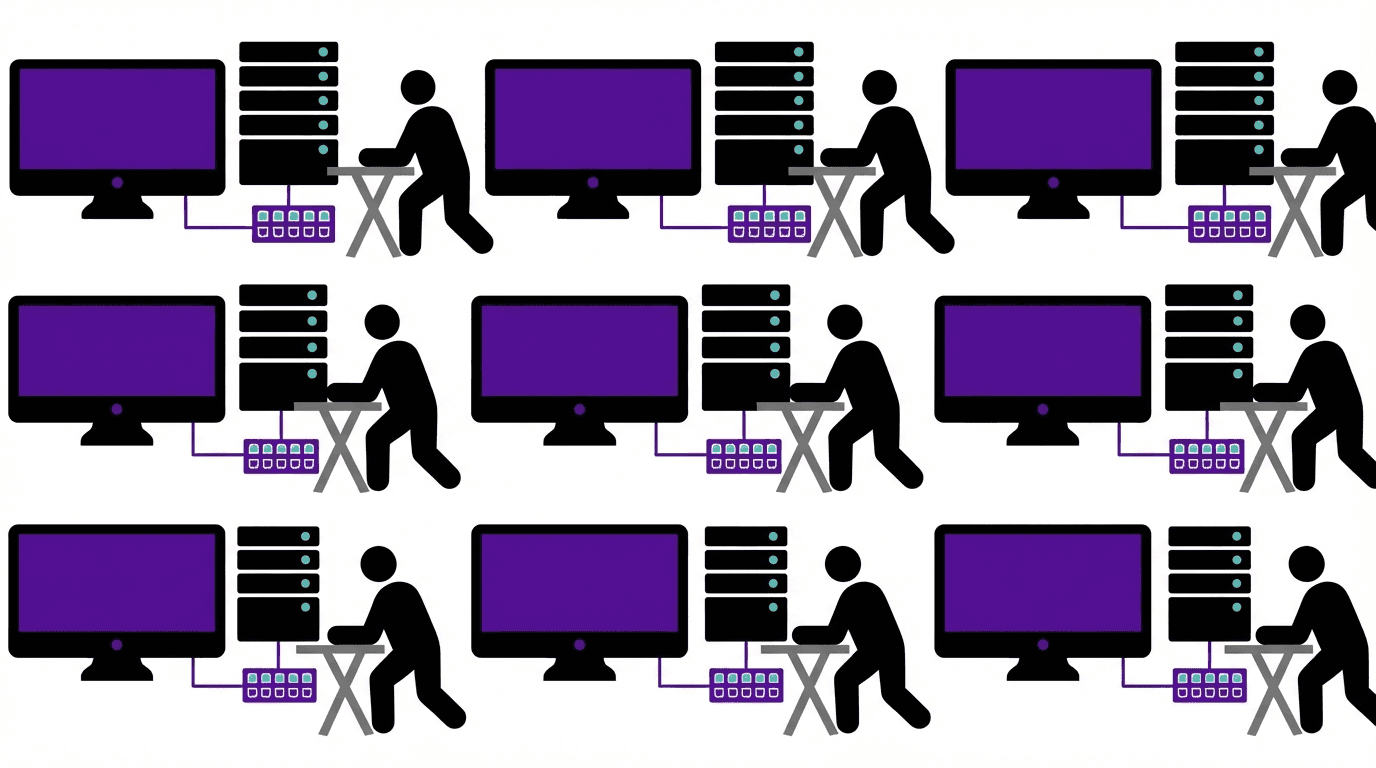
Last week, we conducted two IT audits. Different industries, different sizes, different business models. And yet: almost identical IT landscapes.
Microsoft 365 as the collaboration suite. Azure or AWS for the cloud. An ERP system from Abacus or SAP Business One. Backup via Veeam. Security via one of the three major EDR providers. Managed by a regional MSP that also happens to support the neighbor.
It is as if someone were distributing the same IT landscape across the entire Swiss SME world via copy-paste. And that is a problem. A bigger one than most people think.
Your IT is not your IT
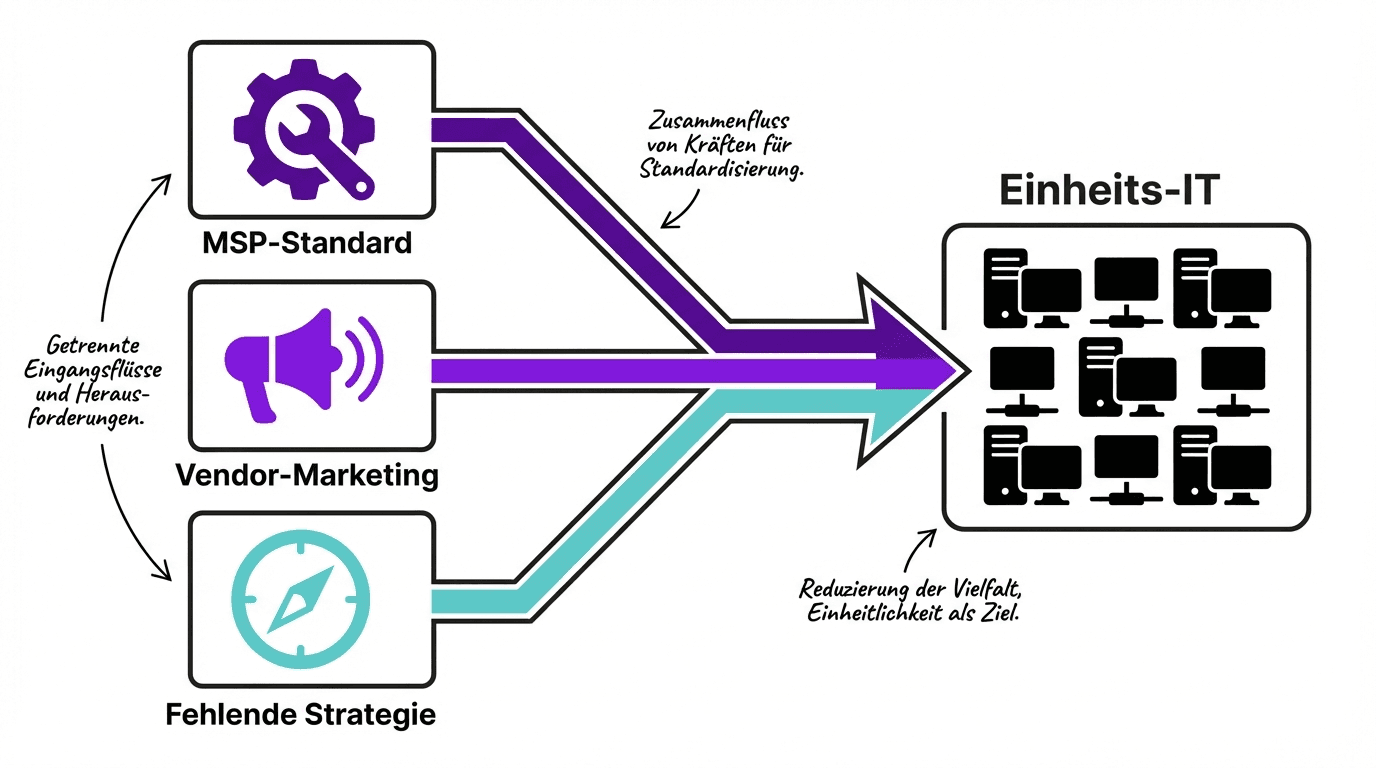
The IT landscape of most SMEs is not strategically planned. It emerges. Step by step. Reactively. Through a combination of three forces, all pushing in the same direction.
Your MSP determines the stack. Managed service providers work efficiently when they operate a standardized stack. That is entirely understandable from a business perspective. But it means your IT is not optimized for your business, but for your provider’s operational processes.
Vendor marketing shapes expectations. Microsoft, Google, and AWS invest billions in narratives that position their platforms as the only sensible solution. That is not wrong. But it narrows the perspective to what a specific vendor offers, instead of what your company needs.
Lack of an internal IT strategy. Without your own vision of what IT should deliver, external actors fill that gap. And they fill it with what they know and can sell.
This is how IT landscapes are created on autopilot. One hundred SMEs, one hundred different business models, the same stack a hundred times.
Once on it, never off it
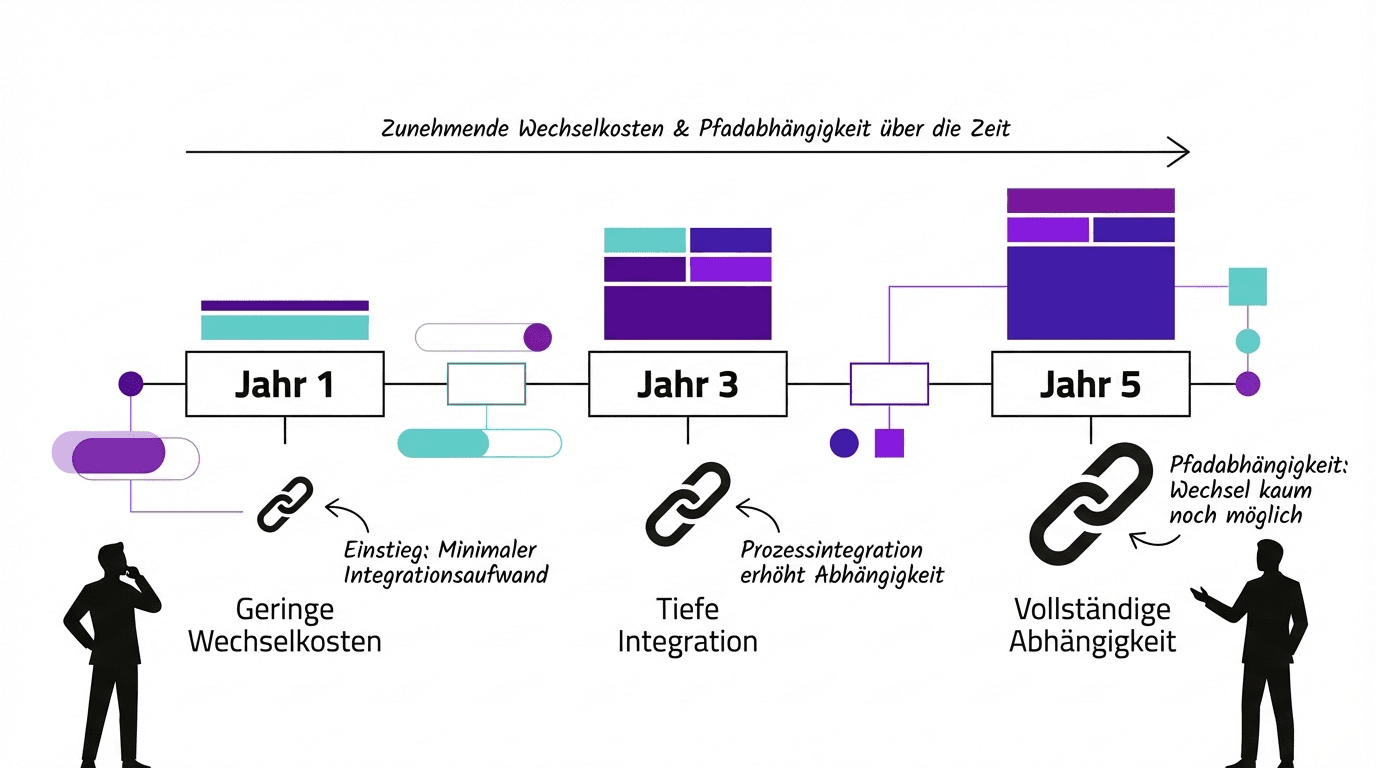
The real problem is not standardization itself. Standardization has advantages: availability of expertise, proven processes, broad community support. The problem is the path dependency that results from it.
With every year you use a stack, switching costs increase. Integrations grow. Processes become tied to specific features. Employees know only this one system. At some point, switching is no longer just expensive—it becomes irrational.
This affects not only individual tools. Your backup depends on your cloud provider. Your security stack depends on your MSP. Your ERP depends on integrations someone built five years ago that no one documented. (We wrote a detailed article about this: You want to switch, but you can’t. Worth reading if this topic affects you.)
Uniformity is not a quality feature
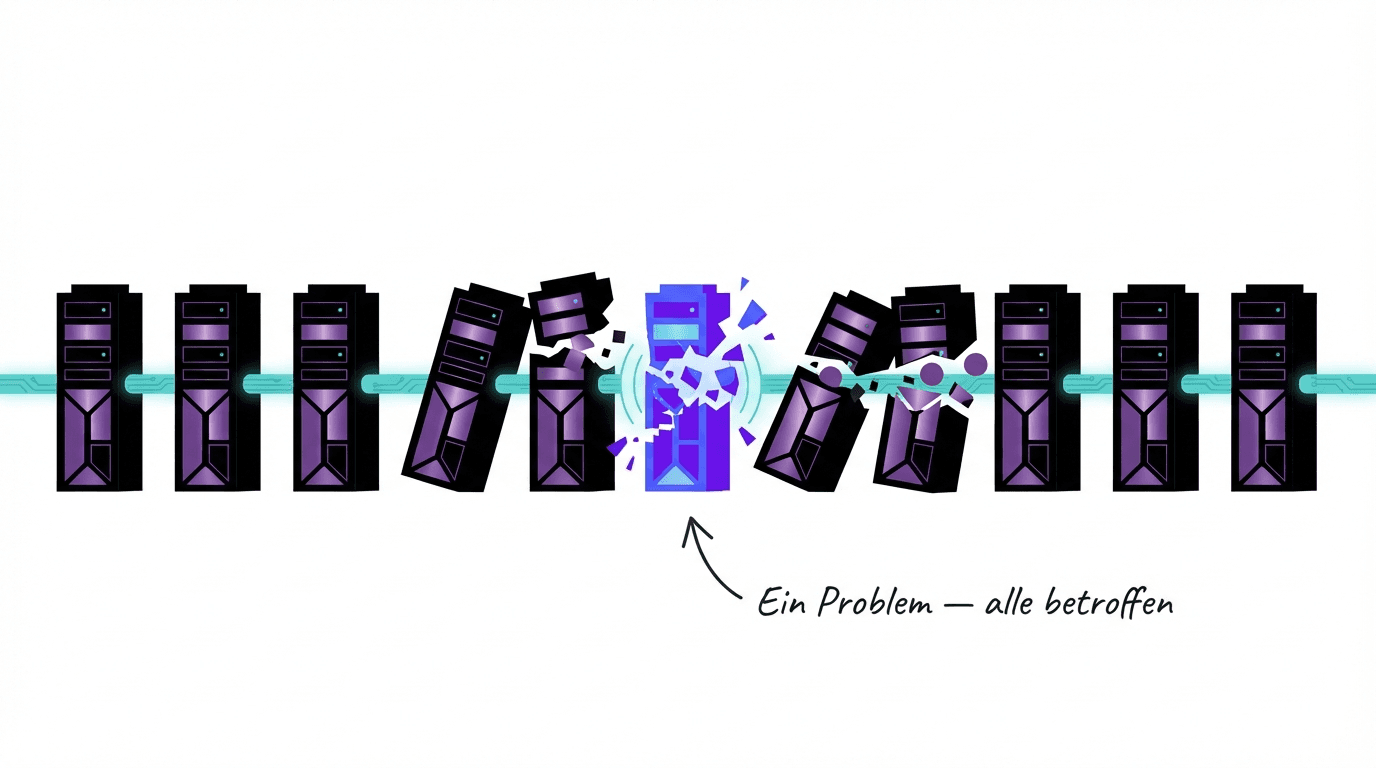
If all SMEs in your industry use the same stack, you also share the same attack surface. A vulnerability in a widely used component does not hit one company—it hits all of them at the same time. In July 2024, a faulty CrowdStrike update brought down around 8.5 million Windows devices worldwide. Monoculture in IT is just as risky as monoculture in agriculture.
And it goes further. If your IT landscape is identical to your competitor’s, technology no longer creates a competitive advantage. It becomes a pure cost center. Cost centers are optimized, not invested in.
What you can do about it (without rebuilding everything)
We are not saying: Throw everything out and rebuild from scratch. That would be just as unrealistic as the status quo is unhealthy. What we are saying is:
Take an honest inventory. Which parts of your IT were deliberately chosen? Which just happened? For most clients we support, the ratio is 20/80. 20% deliberate, 80% grown organically.
Define what is strategic. Not everything has to be unique. But the systems that directly support your business—your ERP, your CRM, your production control—should be tailored to your needs. Not to your MSP’s standard.
Build in optionality. Open standards. Documented interfaces. Contracts with exit clauses. Not because you want to switch, but because you want to be able to switch.
Separate operations from strategy. Your MSP should run your operations reliably. But the strategic decisions—what technologies, what architecture, what direction—must remain with you.
We help Swiss SMEs and mid-market companies consciously shape their IT landscape. Vendor-neutral, pragmatic, with the goal that your IT fits your business. More about our approach.