
Yannick H.,
Too Long; Didn't Read
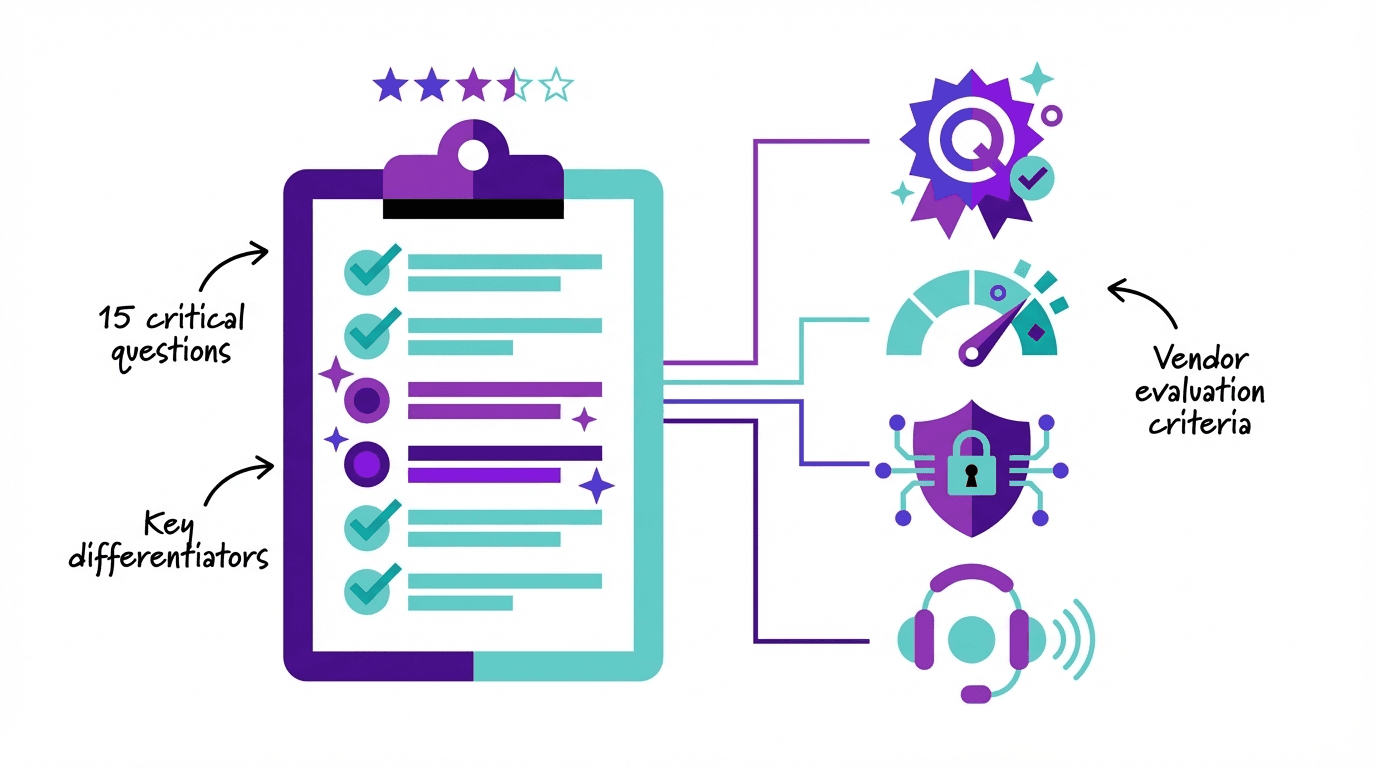
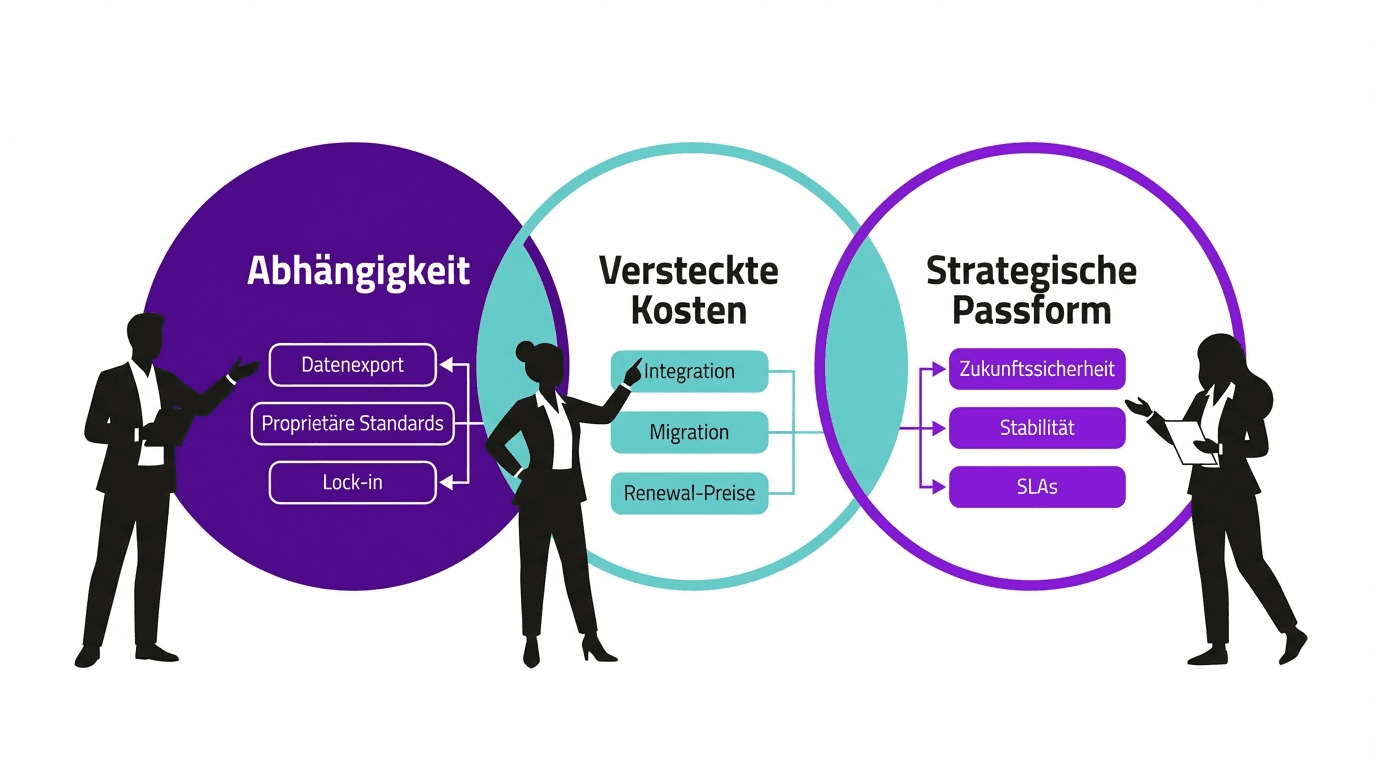
Most IT vendor decisions fail not because of the wrong choice, but because of questions that were never asked. 15 questions, grouped into three blind spots: dependency, hidden costs, and strategic fit.
Last year, a manufacturing company from the Swiss Midlands called us. They had introduced a new ERP solution 18 months earlier. The demo had been impressive, the price fair, the references good. Now they were stuck in a contract that cost 40% more per year than budgeted.
Their problem was not the provider. Their problem was that they had asked the wrong questions.
TL;DR
Most IT vendor decisions fail not because of the wrong choice, but because of questions that were never asked. 15 questions, grouped into three blind spots: dependency, hidden costs, and strategic fit.
Why features and price are the worst decision criteria
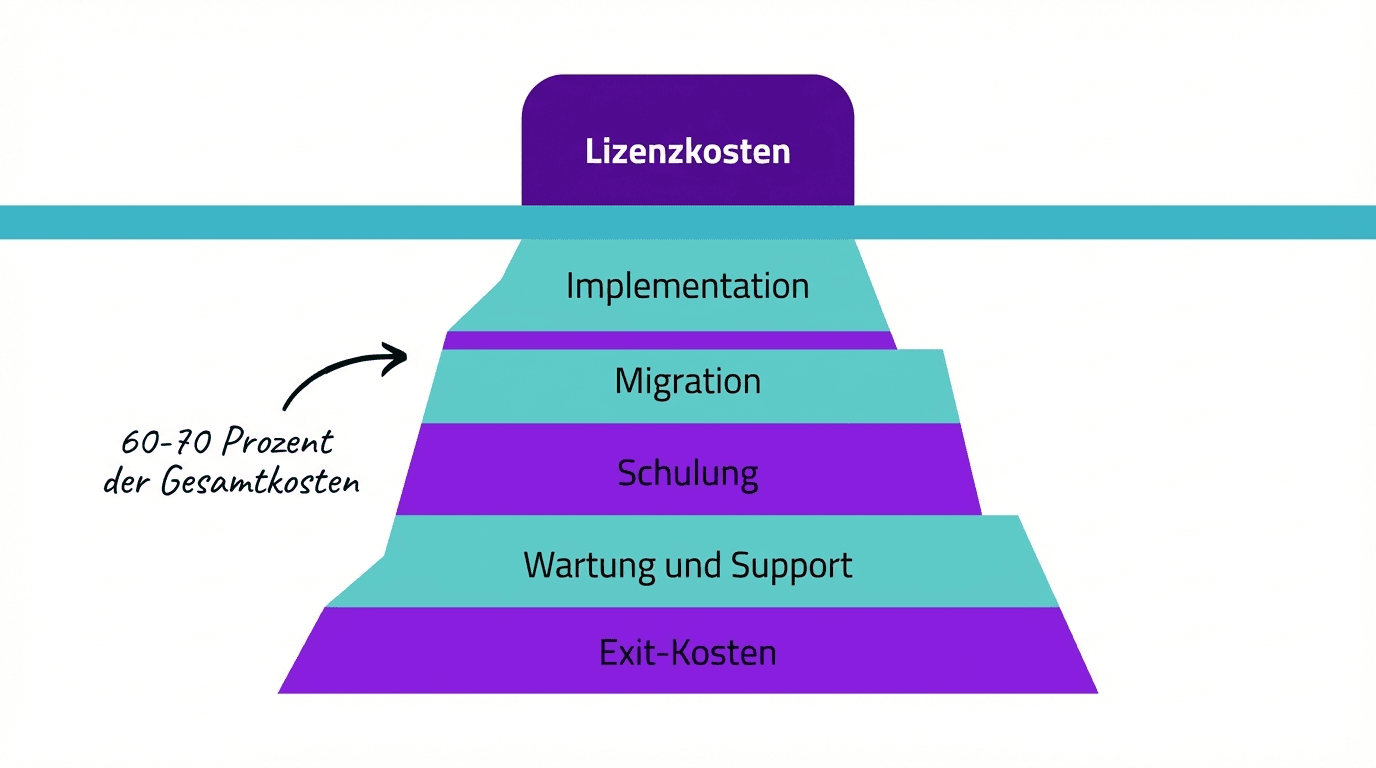
The feature list is what a vendor likes to show most. And the price on paper is only a fraction of what you actually pay. The most expensive mistakes happen in the areas you did not review.
Blind Spot 1: You only realize how deeply locked in you are when you try to exit
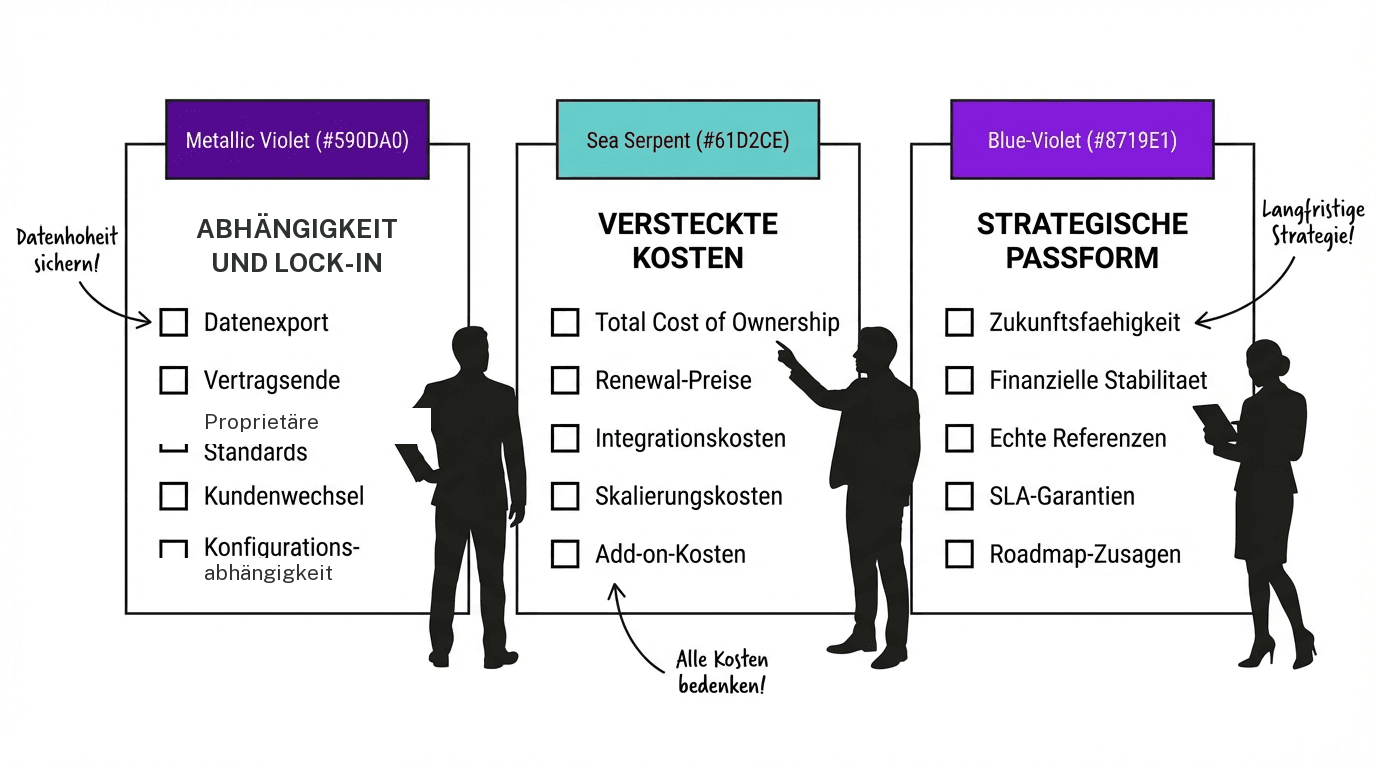
1. In what format can I fully export my data? Not whether you can export. But in what format, how complete it is, and what it costs.
2. What exactly happens if we do not renew the contract? How long do you still have access? In what format do you get your data?
3. Which parts of the solution use proprietary standards? The more proprietary the architecture, the more expensive a later exit becomes.
4. How many customers switched in the last two years? No vendor wants to answer this question. But the answer says more than any curated reference.
5. How dependent are we on your team for customizations?
Blind Spot 2: The bill that arrives after signing
We regularly see that the first 12 months account for only 40–60% of the total costs.
6. What will the solution cost us in year 1, year 3, and year 5, all-inclusive?
7. How high is the renewal price increase, and is it capped?
8. What will integration with our existing systems realistically cost?
9. What costs arise when scaling?
10. Which services cost extra that seemed included in the demo?
Blind Spot 3: Will this still fit in three years?
11. How will this solution fit into our IT landscape in three years?
12. How financially stable is the provider?
13. Can I speak with three real customers that you did not select?
14. How quickly does support deliver in critical issues, contractually guaranteed?
15. Which roadmap features are contractually committed? “That’s coming in Q3” is not a feature. It is a statement of intent. If you depend on it, it must be in the contract.
What the answers reveal
Pay less attention to the content of the answers and more to how they are answered. Hesitation, evasion, “we would have to clarify that.” A good vendor answers uncomfortable questions directly.
Ask the same 15 questions to every provider. Then you compare answers, not demos.
The honest question
How many of these 15 questions did you ask in your last IT vendor decision? We help Swiss companies evaluate IT providers in a structured and vendor-neutral way. More about our IT sourcing consulting.