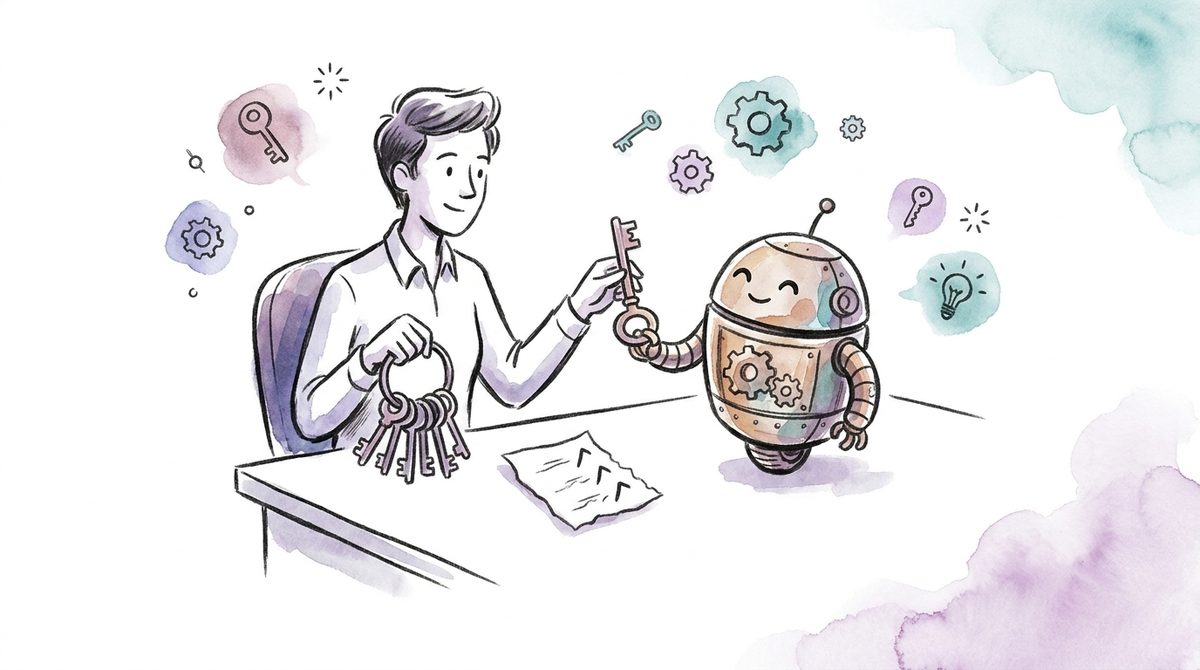
A Tuesday
Take a typical Tuesday. In the morning, you read two reports just to find a single figure. After that, you sit in a status meeting where someone presents to you what was already written in one of those reports. By the evening, you have coordinated a lot, but created nothing.
This Tuesday is an architectural problem, not a time management problem.
The Two Architectures of Your Company
Your company has two architectures. The documented one is in the organizational chart and the process manual. The real one is shown in how information actually flows: through meetings and via the two or three people who know how things work.
The real architecture of your company is the sum of paths that information takes until it reaches a decision. And almost all of these paths lead through people. That is why coordination consumes so much leadership time: the architecture has cast you as the hub, and hubs inevitably become bottlenecks.
What AI Changes About This Architecture
Most companies introduce AI as a tool for individuals: a few ChatGPT licenses and a training session. This changes little about the architecture: information continues to flow through the same channels, except individuals write their emails faster. We described why this approach regularly leads to a dead end for SMEs in AI in SMEs: Between ChatGPT Chaos and Real Business Value.
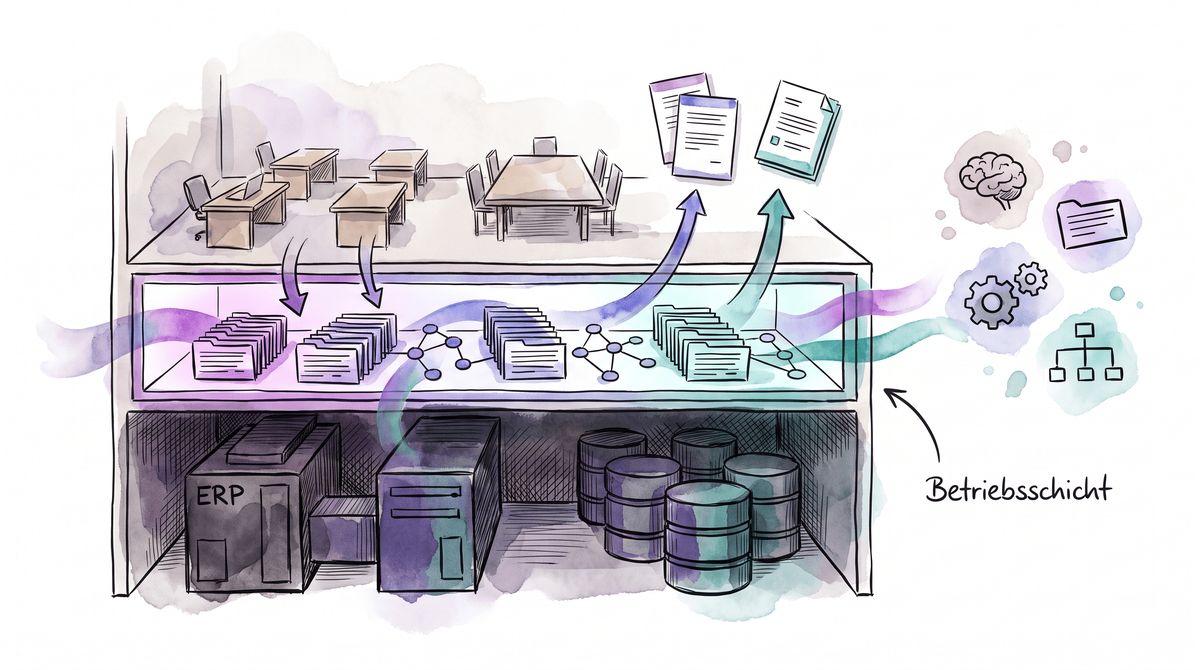
The architectural shift begins when the company gains a new layer: the AI operating layer. You can think of it as the operating system for AI in your enterprise: a layer that structures and stores the company's knowledge and takes over work that currently relies on people, gathering information and preparing decisions.
Over the last thirty years, the ERP became the layer for transactions: bookings and payroll runs. Today, no business would dream of making a booking verbally on the fly. The AI operating layer takes on the same role for knowledge and coordination. Much of what currently flows via verbal requests and follow-ups will in the future be carried by a layer that knows the company.
What the Layer Consists Of
The operating layer has two parts: the corporate memory and the AI system that runs on top of it.
The corporate memory is structured context. It describes how your business makes decisions and what priorities currently apply, but also the softer things: which clients are a good fit for you and the tone you use in your writing. Most of this is currently not stored in any system. It is in people's heads. Explicit knowledge like price lists and organization charts is the smallest part; the implicit knowledge, how you actually decide and work, is what makes the difference.
With this memory, an AI system can answer questions like "How are we doing this quarter?" within the context of your own strategy and KPIs. It can prepare a board meeting or draft a decision memo in the correct format and addressed to the decision-makers.
Without this memory, the same AI remains a generic tool. This explains why "we already have ChatGPT" so often ends in disappointment: the tool could not know the company because it was never introduced to it.
Why the Model Is Not at the Center
AI models get better and cheaper on a monthly basis, and they are becoming interchangeable. The context of your company is not. No provider can bring it with them, and no competitor can copy it.
This has a practical consequence for your architecture: if you build the layer cleanly, it will survive the next model upgrade and the ones after that. The memory remains; the model underneath can be swapped out. Companies that rely on a single tool instead tie their architecture to a provider and start from scratch with the next change. Missing context is also one of the reasons why so many initiatives never make it past the pilot phase; we analyzed the other reasons in Why AI Strategies Fail.
A Layer Needs Maintenance
Your company is not a static entity. People come and go, priorities shift. A context that is not maintained becomes outdated, and with it, the system's answers. We notice this with our own system: two weeks without maintenance, and the answers start to drift.
In our experience, self-implementations fail precisely here. Building the system succeeds with a bit of ambition, but maintenance is neglected in day-to-day operations. After six months, the responsibilities in the system no longer align and the answers become less precise. Trust declines, and usage dies down.
The work on the operating layer therefore does not end with its setup. It must be operated like accounting: with a fixed rhythm and clear responsibility. And the more work the layer takes on, the more important the question of where humans review and decide becomes; we wrote a dedicated article on this: Quality Gates for AI Agents.
What This Means for Your Tuesday
From the outside, the architecture with an operating layer looks unspectacular. The organizational chart hangs on the wall unchanged. What has changed is the path of information: it reaches you prepared rather than raw. The figure for which you used to read two reports is now in a briefing that knows your strategy. The status meeting gets shorter or is eliminated because the layer knows and shares the status.
You get back the part of your week that the old architecture had earmarked for coordination.
The Honest Question
Adding that layer also shifts responsibility. How to regulate it is described under AI governance and secure AI adoption.
Whether your company needs an AI operating layer is decided by a question that is more uncomfortable than any tool evaluation: How much of your leadership time currently goes into coordination that could be handled by a system that knows your company? If the answer bothers you, first extract your company's knowledge from people's heads into a structure that can support it. The next AI tool can wait.