The Scenario That Eventually Comes
The first year was great. The new SaaS provider delivered fast implementation, good features, and friendly support. You sign a three-year contract. Everything runs smoothly.
Then, after a year and a half, the inevitable happens.
The provider raises prices by 40%. A feature you need is discontinued. A competitor’s product suddenly looks much better.
You want to switch. And then you realize:
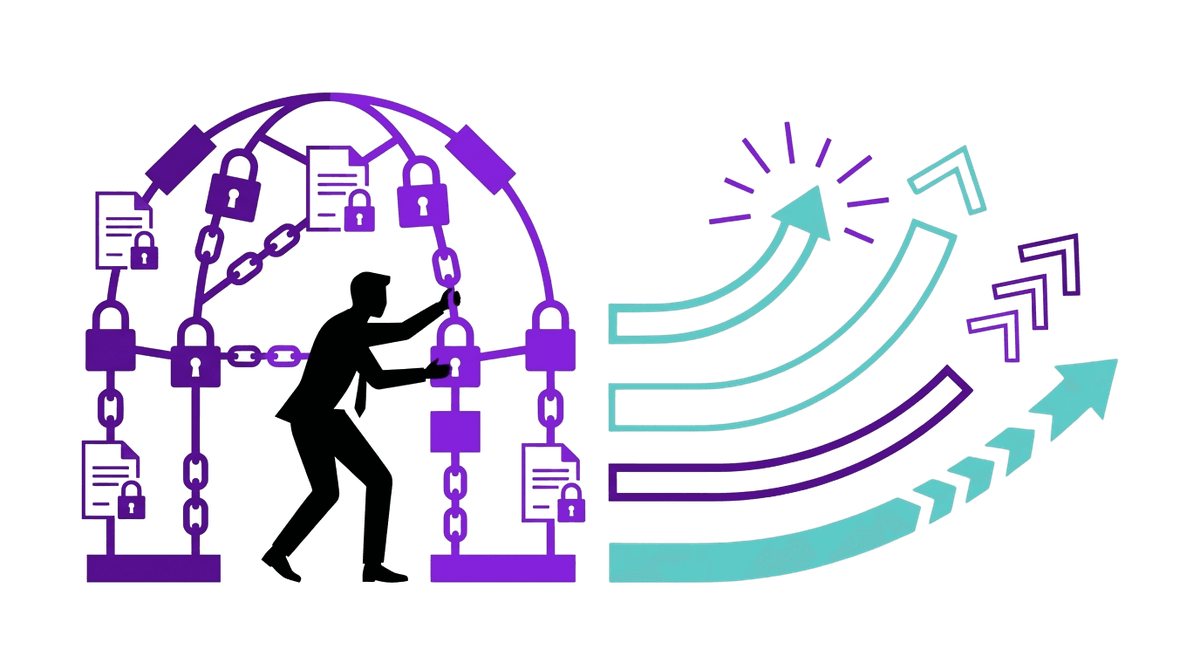
Your data is in a proprietary format. Your workflows are deeply integrated. Your team knows only this system. The switch would take months and cost hundreds of thousands of Swiss francs.
That is vendor lock-in. Not theory - reality.
(We see this regularly. More often than you think.)
The Three Types of Lock-in
Technical lock-in
The most obvious one. Your data is trapped in a proprietary format. Your integrations are built so deeply into the platform that moving means rewriting everything.
AWS Auto Scaling? Not transferable to Azure. Salesforce data? Complex export. Marketo workflows? Months of migration work.
Contractual lock-in
Often overlooked because it looks less technical. But it is just as effective.
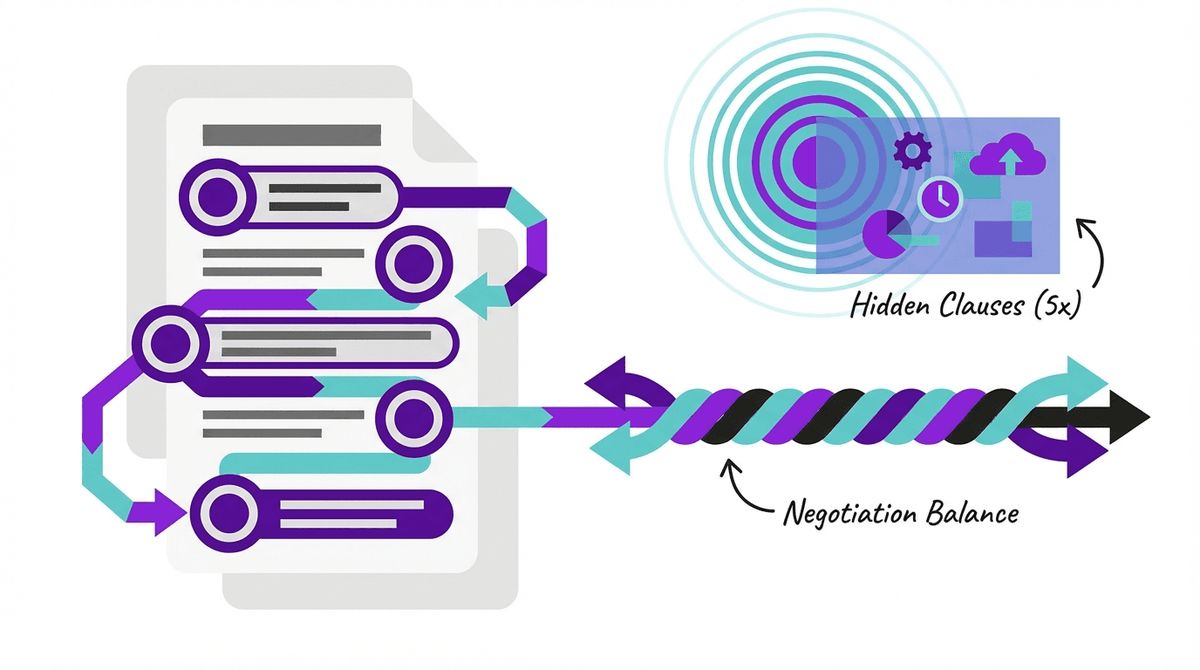
Long notice periods. Heavy penalties for early termination. Automatic renewals. And then the hidden clauses: data retrieval fees that explode when you want to export your data.
Knowledge lock-in
The most underestimated form.
Your team has invested thousands of hours in this platform. They know every hidden feature. They have written custom scripts. They know how to optimize the system.
Switching means months of retraining. Loss of institutional knowledge. A drop in productivity. Maybe even losing people who refuse to relearn everything from scratch.
Why Lock-in Is So Expensive
The direct costs are obvious: higher prices because you cannot negotiate. Exit costs if you try to leave. Productivity losses during migration.
The indirect costs are worse.
You cannot negotiate with other providers - because you cannot switch anyway. The provider knows that. Your bargaining position? Zero.
Your architecture is defined by the limits of one platform. You cannot react quickly. Better tools enter the market - but you are tied down.
One of our clients paid 15% more every year for 8 years for their CRM. Not because the CRM got better - but because switching would have been too expensive. An estimated 500,000 Swiss francs in migration costs. So they stayed. And paid.
(By the way, that is not an isolated case. That is the norm.)
How to Avoid Lock-in
In the contract
The first thing you should change: the contract terms.
Notice periods: maximum 30-60 days. Anything longer is too long.
Data export clauses: explicitly state that you can export your data free of charge and in a standard format.
No data retrieval fees: the provider will try to include them. Push back.
Exit assistance: the provider should help with the migration - not sabotage it.
Negotiation tip: the first contract draft is never the best one. Providers would rather keep a customer with better terms than lose one.
In the technology
Your data should never be in a format that only one provider can read.
Use standard formats. SQL, JSON, CSV - not proprietary database engines.
API-first approach. If your provider has a good API, use it. That makes exports trivial.
Regular backup tests. Don’t hope you can export - test it. Every 6 months. If it does not work, you will know early.
Use containers. Docker makes your applications portable. From AWS to Azure to on-premise - it does not matter.
Infrastructure as code. Terraform instead of the cloud console. That makes switching easier.
In the team
Document critical processes. Not just "in the mind of an expert".
At least two people should be able to do everything critical. Bus factor greater than 1.
If possible, train generic concepts. SQL, REST APIs, Terraform - not tool-specific knowledge.
When Lock-in Is Okay
Let me be honest: some lock-in is not only acceptable - it is strategically sensible.
AWS RDS, for example. You have technical lock-in. But the features (Multi-AZ, read replicas, automated backups) give you value you could not build yourself. PostgreSQL underneath is portable. That is a deliberate trade-off.
The difference:
Strategic lock-in - intentional, measured, consciously accepted.
Accidental lock-in - happens out of ignorance, no alternative evaluated.
Self-inflicted lock-in - "We just never planned for it."
The first is okay. The second and third are not.
The Most Common Mistake
Vendor lock-in is not static. It gets worse over time if you do not actively counter it.
The most common mistake: choosing a provider once and then forgetting about it.
Costs creep up. Contracts renew automatically. The team becomes more dependent. And eventually you realize: you are trapped.
The solution? Annual reviews.
Are we still paying fair prices? What are the best alternatives now? What would switching cost? Do we still need this provider?
These reviews should not produce the same result every year. Sometimes the answer is "we stay." Sometimes it is "we start planning."
What You Can Do
- List your top 5 providers - the critical ones. Cloud, CRM, ERP, whatever they are.
- Ask yourself for each one: Could I be out in 90 days? If not - why not?
- Review the contracts - notice periods, exit clauses, data export terms.
- Test a data export - can you actually get your data out? In what format?
- Calculate the exit costs - what would a switch realistically cost? You should know that number.
The Point
Lock-in is not a law of nature. It is a strategic problem with strategic solutions.
The best time to prevent it was when the contract was signed. The second-best time is today.
Companies that keep their provider dependencies under control are not paranoid. They are simply planning ahead. They negotiate better. They test their exits before they need them.
The result? More negotiating power. More flexibility. And yes - less money for the same services.
That is not paranoia. That is strategic vendor management.
Preparing an exit cleanly on the technical side, data and access included, is part of our Security Management and Operations.
You want to know how dependent you really are? We perform lock-in audits for Swiss companies - pragmatic and without fearmongering.Talk to us.