Here is something that has been keeping us up at night lately...
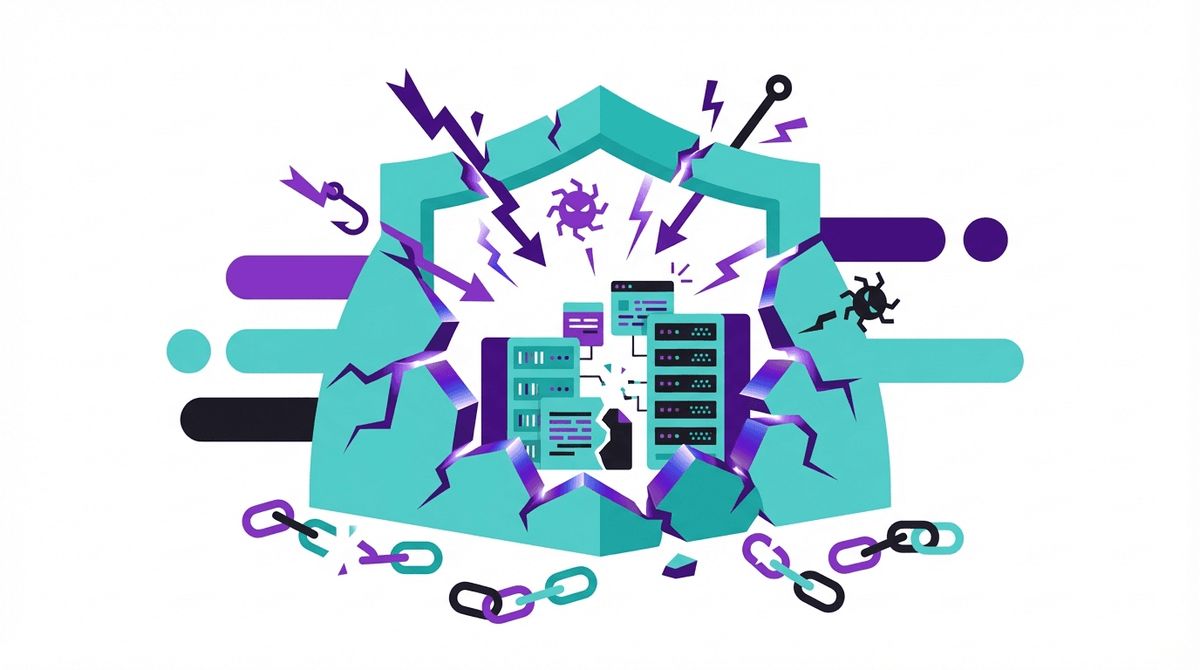
We work with organizations across all industries, and there is this pattern we keep seeing. Companies invest heavily in firewalls, perimeter defenses, and network security... and then they still get hacked. Not because their tools failed. But because the entire model they are working with is fundamentally flawed.
It is like building a really sophisticated lock for your front door while all the windows are wide open.
The uncomfortable truth about network trust
Let’s talk about something no one really wants to admit out loud.
Remember when your network still had real boundaries? When you could point to where "inside" ended and "outside" began? Yeah... those days are over.
Your employees work from home offices, cafés, airport lounges. Your applications are scattered across AWS, Azure, and three different SaaS platforms. Your partners need access to specific systems. Your contractors log in from who knows where.
And yet... somehow we still treat network access as if it were 2005.
Here is what actually happens in most breaches we have investigated: someone gets compromised (phishing email, weak password, whatever), and suddenly the attacker has a foot in the door. And because everything inside the network trusts everything else inside the network, they simply move around... freely. Read data. Access systems. Basically have a field day.
It is not even particularly difficult for them.
For those who want to dive deeper: Zero Trust demystified: What the security concept can really do, and what it cannot.
The shift we are seeing (that changes everything)
In recent years, we have helped clients transition to what we call a continuous verification model. The core principle? Stop assuming that anything is safe just because it is "inside" your network.
Instead, verify everything. Every time. Every request.
Sounds paranoid? Maybe. But here is the thing, treating your network as potentially hostile is not paranoia when breaches are happening at the scale we are seeing. It is simply... realistic risk management.
We are essentially turning the entire security model upside down. Instead of "you are in, so you are trusted," it is "prove that you should have access, right now, for this specific thing."
And the results? They have been quite remarkable.
Seven strategic changes that actually work
We have distilled what we are seeing into seven strategic changes organizations need to make. These are not just theoretical concepts, we are implementing them with clients right now, and they are making a real difference.
1. Map everything (yes, everything)
This is where almost everyone wants to jump ahead. Don’t.
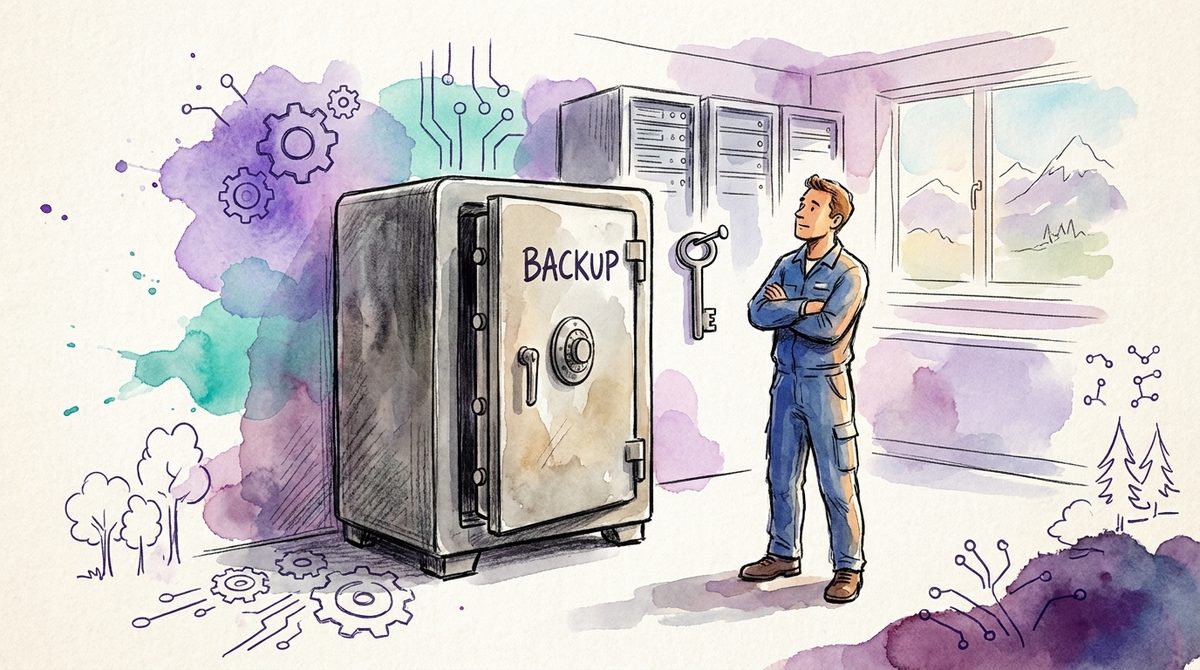
Before you can protect anything, you need to know what you actually have. We are talking about a complete inventory: every user, every device, every application, every data store. Where is your sensitive data actually located? Which systems are business-critical? Which legacy applications are lurking in corners no one wants to talk about?
We recently did this exercise with a client who "knew their environment really well." It turned out they had 23 shadow IT applications they did not even know existed. Every single one a potential risk.
You cannot secure what you do not know. Period.
2. Make identity your new perimeter
In the old model, your network was your perimeter. Inside = trusted, outside = untrusted.
That model is dead.
The new perimeter? Identity. Every user, every service, every device needs a unique, cryptographically verifiable identity. No exceptions.
Think about it this way: instead of asking "are you in our network?" you ask "can you prove you are who you say you are?" And that proof has to be strong. We are talking about multi-factor authentication, certificate-based authentication, the whole package.
This applies to everything, not just people. That API call? Needs an identity. That microservice? Identity. That IoT device? You guessed it.
3. Build dynamic trust scoring
This is where it gets interesting.
Static security policies are no longer enough. You need systems that continuously evaluate trustworthiness based on behavior, context, and real-time signals.
Is someone accessing data from a new location? At an unusual time? On a device that is not fully patched? From an IP address in a country they have never accessed from before?
Any one of these things alone might not be concerning. But together? They paint a picture.
We help clients build scoring systems that evaluate risk dynamically. Your trust level in any given connection should constantly adapt based on what you observe. Not set-and-forget. Continuous assessment.
4. Implement granular access controls
This is the heart of the model: every request for access is evaluated against a policy. Every. Single. One.
And these policies can be incredibly sophisticated. They take into account who is asking, what they want to access, from where, on which device, at what time, and what sensitivity level the data has.
Need to give a partner organization temporary access to specific project files? Your policies handle that. Need to ensure financial data is only accessible from managed devices during business hours? Your policies handle that too.
The power here lies in flexibility and granularity. You no longer open broad network access. You grant specific permissions for specific resources based on specific conditions.
5. Authenticate everything, everywhere
No more implicit trust. None.
Every single connection needs both authentication (prove who you are) and authorization (prove you are allowed to do what you are trying to do). There are no shortcuts here.
Your policy engine becomes your central decision point, pulling together signals from multiple sources: device health, user behavior, location data, threat intelligence, time of day... all of that feeds into the decision on whether access is granted.
And here is the crucial part: these decisions happen in real time, for every request. Not just at login. Every time someone tries to access something.
It is more overhead, sure. But it is also the difference between an attacker running into a wall at every step versus moving freely through your systems.
6. Change your monitoring strategy
When you implement this model, your entire monitoring approach has to change.
You are no longer just observing network traffic patterns. You are monitoring user behavior, device health, and service integrity directly. How are they behaving? Are they policy-compliant? Are there anomalies?
This monitoring feeds back into your policy engine, creating that continuous feedback loop. Something looks odd? Your policies can automatically adjust access levels or trigger additional verification steps.
One of our clients caught an account compromise within minutes because their monitoring flagged unusual access patterns. In the old model, it would have taken days or weeks to notice.
7. Rethink your technology stack
Here is practical advice we give every client: not all services and products are built for this model.
Some of your legacy systems... they will fight you. They were designed for the old perimeter-based world, and retrofitting them is painful. Really painful.
When you evaluate new tools or replace old ones, prioritize solutions that natively support continuous verification. Look for standards-based technologies that integrate well with modern identity providers and policy engines.
And if you are stuck with legacy systems that cannot adapt? You need transition strategies, maybe segmented networks, authentication proxies, or additional compensating controls. We constantly help clients navigate these hybrid states.
We go deeper on this topic in Zero Trust Transformation: Where do I actually start?.
The reality no one mentions
Let’s be brutally honest for a second.
Implementing this kind of model is hard. Really hard.
You are not going to get everything perfect right away. Most organizations will not fully implement all seven changes for months or even years. You will have legacy systems that simply cannot support these approaches. You will have business units that resist because it looks like too much friction.
That is... normal. Even expected.
We always take a phased approach with clients. Start with your most critical assets. Build your identity foundation. Put your policies for high-value data in place. Expand from there.
And yes, you will probably run a hybrid environment for a while. Some systems in the new model, others still behind traditional controls. That is okay. It is progress, and progress counts.
Why this matters beyond "better security"
Here is what we keep seeing when clients make these changes:
Better visibility. Suddenly you actually know what is happening in your environment. Who is accessing what, when, from where, on which device. That visibility alone is incredibly valuable.
More granular control. You can implement truly nuanced access policies that align security with business requirements. No more "all-or-nothing" network access decisions.
Improved compliance posture. When auditors ask "who has access to this sensitive data?" you can actually tell them. With details.
Reduced blast radius. If something goes wrong, and something always goes wrong eventually, the attacker cannot simply move freely through your network. They hit barriers at every step.
Where most organizations start (without drowning)
If you are looking at this and thinking "this sounds overwhelming"... yes, it can be.
But here is how we typically approach it with clients:
Start with that inventory. You really cannot skip this. Understand what you have, where your crown jewels are, and where your biggest risks lie.
Then focus on identity. Make your identity and access management foundation solid. That will be the cornerstone for everything else.
From there, start implementing granular policies for your most sensitive resources. You do not have to do everything at once. Pick your highest-risk areas and build from there.
The key is to have a roadmap. To know where you are going, even if you do it in phases.
The bottom line
Traditional perimeter security is broken. Not because the tools are bad, but because the underlying model no longer fits reality.
Your network is not a safe space. It has not been for years. We have all just collectively pretended otherwise because changing our security models is hard and expensive.
But the cost of not changing? It is higher. Much higher.
The organizations we work with that have made these changes are not just more secure. They are more agile, they have better visibility, and they are better positioned for whatever comes next, whether that is more cloud migration, more remote work, or entirely new business models we have not thought of yet.
The question is not really whether to make these changes. It is how quickly you can start and what your roadmap looks like.
Because somewhere out there, an attacker is betting that you are still operating with the old model.
Do not prove them right.
We support the move from network to identity step by step under Security Management and Operations.
Ready to explore how a continuous verification model could work for your organization? We specialize in helping companies navigate this transition pragmatically, aligning security improvements with business realities. Let’s talk about what makes sense for your specific environment.