The Conversation That Goes Wrong
"This is much more expensive than our in-house solution!"
That is what the CFO hears when an outsourcing proposal is on the table. The monthly total looks impressive.
But are you really comparing apples to apples?
That is the biggest problem with this decision. The outsourcing provider quotes you its service fee. Clear, transparent, monthly.
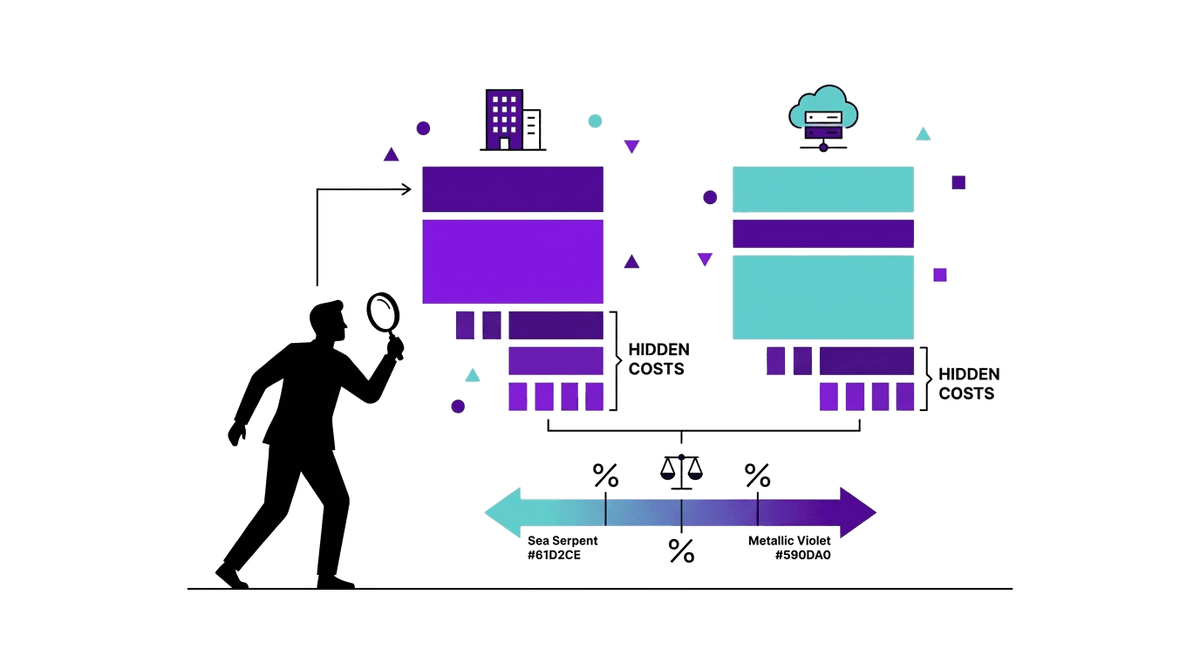
The costs of your in-house IT? They are hidden everywhere. In the system administrator's salary. In infrastructure costs. In the licenses you have not needed for two years. In the turnover that affects you every year.
An honest total cost of ownership analysis reveals what you are really paying.
(The results are often surprising. In both directions.)
What In-House Really Costs
Let us be honest: in-house IT has advantages. But it also costs a lot of money. Most CFOs significantly underestimate this.
Salaries Are Only the Beginning
A typical team of 4 people: IT manager, two admins, one technician. Salaries? Maybe 250,000 francs per year.
But wait. Add: employer contributions. Pension fund. Training. Insurance. Suddenly you are at 350,000.
Infrastructure Is Always Part of It
Servers, backup systems, network equipment. Storage. Telephony. Power for the server room. Cooling.
That can easily be 50,000 to 150,000 francs per year - depending on complexity.
Licenses Keep Adding Up
Operating systems, virtualization, backup, security, collaboration tools. Maybe database licenses.
Somewhere between 30,000 and 100,000 francs per year.
The Hidden Costs
This is where it gets really expensive.
An employee resigns? Recruiting costs 10,000 to 20,000 francs. Plus onboarding. Plus productivity loss.
Unexpected outages? A major incident can quickly cost 50,000 francs. Or more.
Vacation and sickness? Your team is not available 365 days a year. But the systems still have to run.
Scope creep? Your IT team gets asked for everything. "Can you quickly..." That takes away 10-20% of capacity.
The Honest Total
For a 4-person team, you quickly end up at 500,000 to 600,000 francs per year.
That is about 140,000 francs per person. Far more than salary alone.
For those who want to go deeper: Digital Sovereignty for Swiss Companies - Between EU Regulation and Local Requirements.
What Outsourcing Really Costs
Outsourcing seems attractive. Fixed fee, no surprises.
Is that true?
The Service Fee Is Only the Beginning
An MSP for 50-100 employees? Maybe 60,000 to 150,000 francs per year.
But: out-of-scope work is added. Anything not in the SLA. Additional licenses through the provider.
Realistically: 70,000 to 200,000 francs per year.
Transition Costs Money
If you switch, migration costs arise. Data migration. Knowledge transfer. Parallel operations. Training your team.
One-time: 50,000 to 150,000 francs. Spread over three years.
Someone Has to Manage the Provider
The most common mistake: "We do not need an IT manager anymore."
Wrong. You need someone to manage the provider. To review contracts. To escalate problems. To ensure that SLAs are met.
That is 30,000 to 80,000 francs per year - for one person doing it on the side, or proportionally.
The Hidden Costs
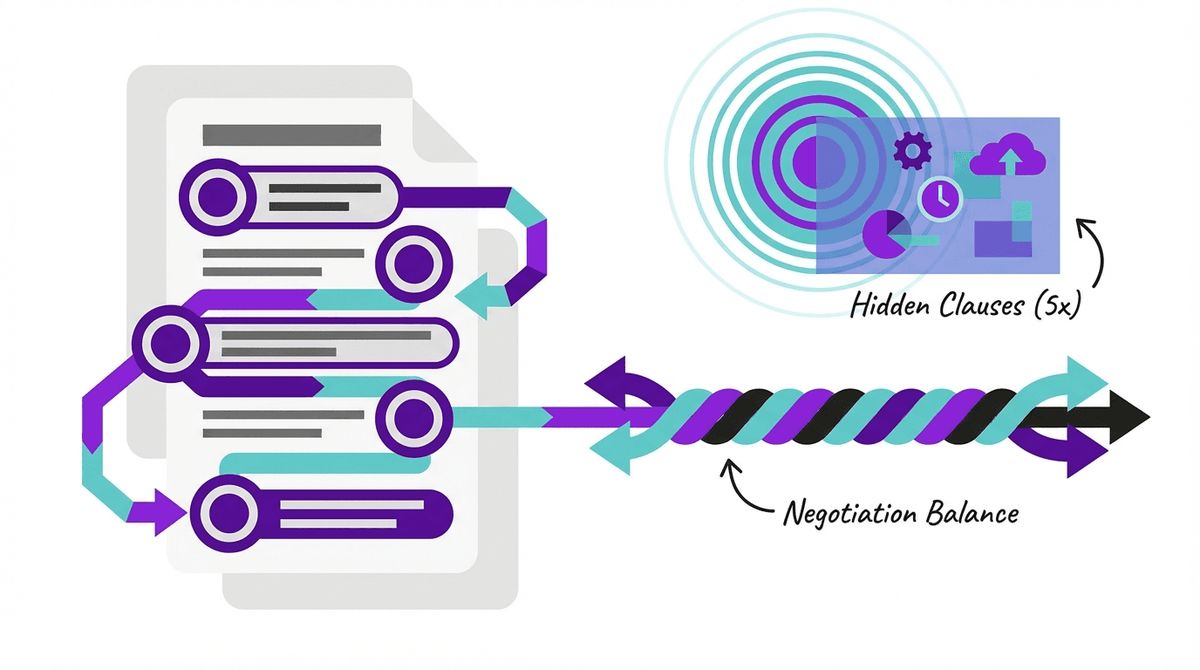
"That is not included in the service" - and suddenly you pay extra.
Communication overhead. You cannot access the server directly. Tickets take longer.
SLAs that are not as good as they look on paper.
Vendor lock-in. You are tied to the provider. Switching is expensive.
The Honest Total
For the same scenario: 250,000 to 350,000 francs per year.
That is cheaper than in-house. But not as cheap as the service fee suggests.
When Outsourcing Makes Sense
Outsourcing is not the solution for everyone.
You should outsource if:
IT is not your competitive advantage. You need it for core processes, but not for differentiation.
You are growing quickly. In-house scales poorly. With an MSP, costs grow more slowly.
You struggle with IT recruitment. Good people are expensive and hard to find.
You need 24/7 support. Without in-house on-call coverage.
Your margins are thin. Outsourcing makes IT costs variable and predictable.
You should keep it in-house if:
IT is your core business. A SaaS company, a fintech - there IT is not support, but the product.
You have highly complex requirements. Custom software, specialized systems.
Security is critical. Banks, healthcare, regulated industries.
You already have a strong team. That is an asset, not a cost center.
You need a fast response. The delay caused by ticketing is not acceptable.
The Most Common Mistake
The biggest mistake in this decision: comparing only the obvious costs.
Service fee vs. salaries. That is like comparing apples and oranges.
The real question is: what does it cost over three years, with everything included?
Transition. Management overhead. Hidden costs. Risks.
And: what does the solution give you that you need? Control? Flexibility? Scalability?
A company that is growing quickly has different requirements than one that remains stable.
(That sounds obvious. But you would be surprised how often this analysis is skipped.)
Conclusion
IT decisions are financial decisions. And as with all financial decisions, transparency is your advantage.
The question "outsourcing or in-house?" does not have a one-size-fits-all answer. But with an honest TCO analysis, you can make the right decision for your company.
In-house is more expensive than it looks. Outsourcing is cheaper - but not as cheap as the fee suggests.
The companies that understand this do not compare fees. They compare total costs. Over years. With everything that goes with it.
That is not sexy. But it makes all the difference.
What you outsource and what you must keep is not a cost question in security. We sort it out under Security Management and Operations.
Do you want to know what is more economical for your company? We conduct TCO analyses for Swiss companies - honestly and without a sales pitch.Talk to us.