
Marc H.,
Too Long; Didn't Read
IT cost allocation makes IT spending visible by department. Most companies know their total IT costs, but not the costs by department, project, or customer. We explain showback, chargeback, and how to get started pragmatically.

TL;DR
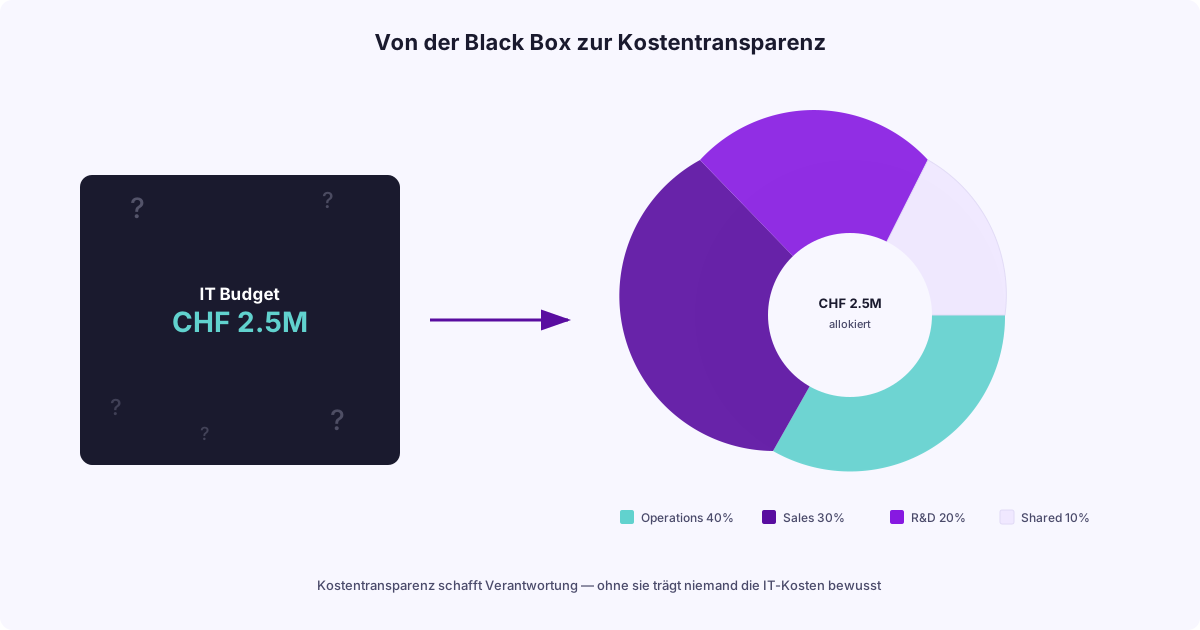
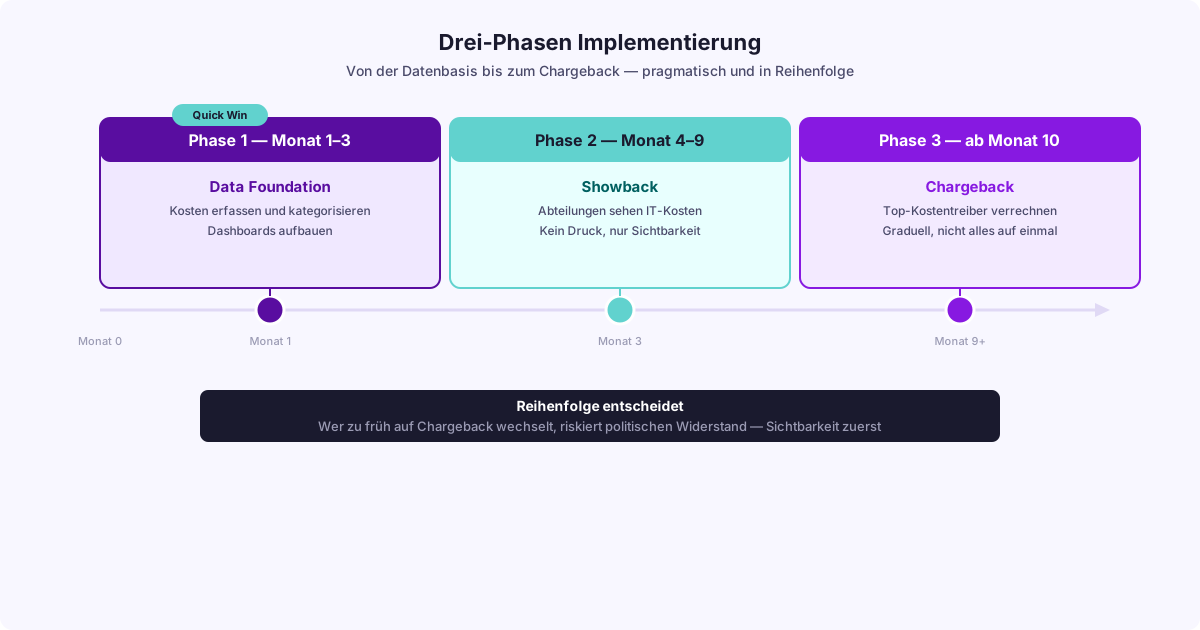
Most companies know their total IT costs, but not the IT costs per department, project, or customer. Without this transparency, no one takes responsibility, and IT is generally seen as expensive. IT cost allocation solves exactly that: it makes visible who consumes what. The pragmatic way to start is with a Showback model for 6 months before you begin with Chargeback.
"What does IT cost?"
"2.5 million."
"Yes, but what exactly for?"
Silence.
We play out this scene in customer conversations more often than we'd like. Not because the IT leaders are doing poor work. But because total budgets are simply easier to track than itemized costs per business unit.
This is not an isolated case. It is the rule.
The real problem: No one feels responsible
If IT costs are a black box, an uncomfortable dynamic emerges. Departments order IT resources without being budget-conscious. IT then becomes the scapegoat. "IT is simply too expensive" is a sentence we hear regularly. It is rarely true.
It is not about saving more. It is about bringing responsibility to where decisions are made.
Three models you need to know
Showback: Visibility without billing
In Showback, you show each department what IT costs they have "caused". You do not issue an invoice. You simply send a report. We recommend Showback as a starting point for almost all our clients.
Chargeback: Real billing, real responsibility
In the Chargeback model, IT costs are actually allocated to cost centers. The result: real accountability. But without CFO buy-in, Chargeback becomes an IT project without consequences.
Hybrid: The pragmatic middle ground
In practice, most of our clients end up with a hybrid model. Shared infrastructure is allocated according to a formula, project-related costs are billed directly.
Allocation keys: Who pays how much?
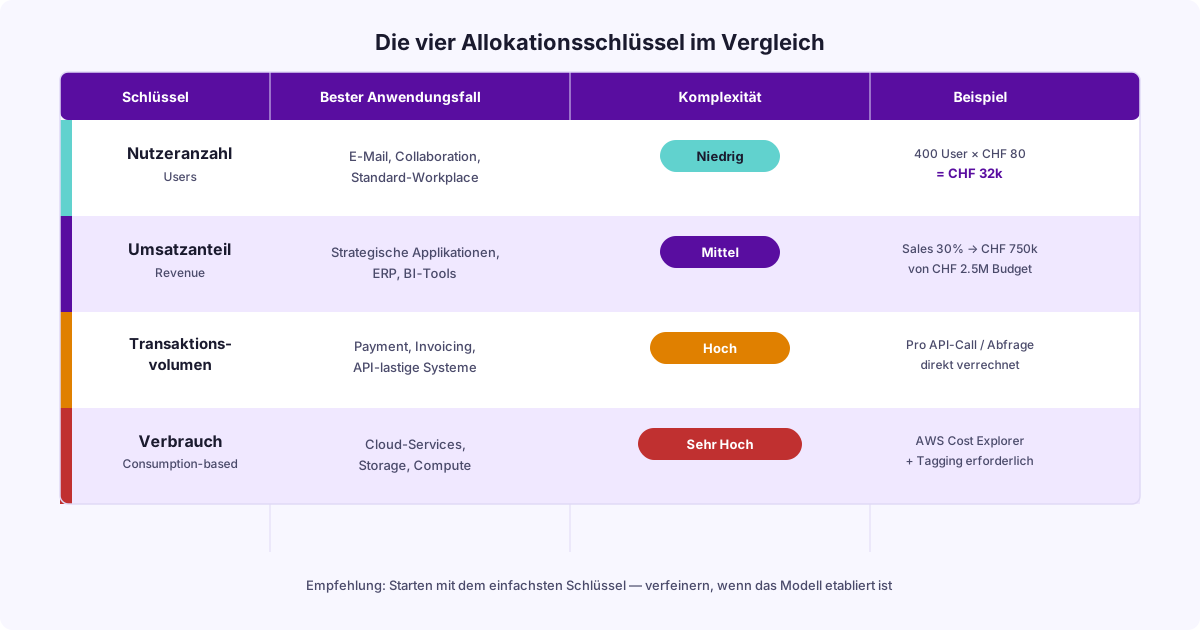
Four common approaches: by number of users, by share of revenue, by transaction volume, by consumption. No key is perfect. Start with the simplest one that is accepted.
The mistakes we keep seeing
The model is made too complex. Eighteen different cost pools, seven allocation keys. Nobody uses it.
It is treated as an IT project. IT cost allocation is a business issue that needs IT data.
The CFO buy-in is missing. Without the CFO behind it, Chargeback is an exercise in symbolism.
In summary
The pragmatic approach: start with Showback, build visibility, align allocation keys with the reality of the company, and only then switch to Chargeback when the foundation is in place.
If you're not sure where to start: FinOps Advisory.