
Marc H.,
Too Long; Didn't Read
IT proposals are structured in a way that makes a fair comparison nearly impossible. We show you seven specific areas where costs are regularly hidden, along with a checklist you can use to thoroughly review any quote in 30 minutes.
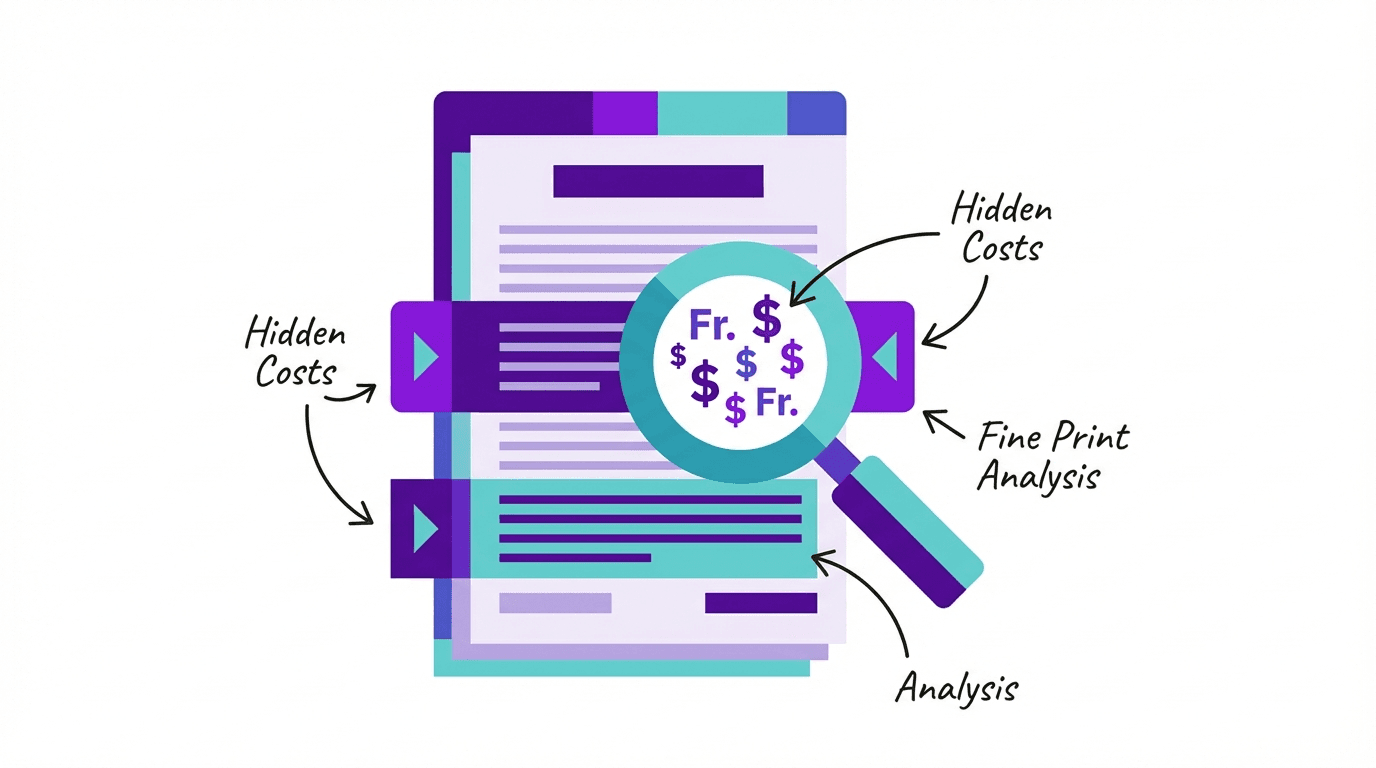
Most IT proposals are not designed to help you make a decision. They are designed to be signed.
Sounds harsh. But it’s the reality we see when Swiss SMEs submit their offers to us for evaluation. The actual costs are almost never in the proposal. They’re in what’s missing.
TLDR
IT proposals are structurally built in a way that makes a fair comparison nearly impossible. We show you seven specific areas where costs are regularly hidden, and a checklist you can use to examine any proposal in 30 minutes.
Why comparison fails from the start
Three proposals on the table. All look professional. The prices are close to each other. Still, one of them will have been twice as expensive as the other after three years.
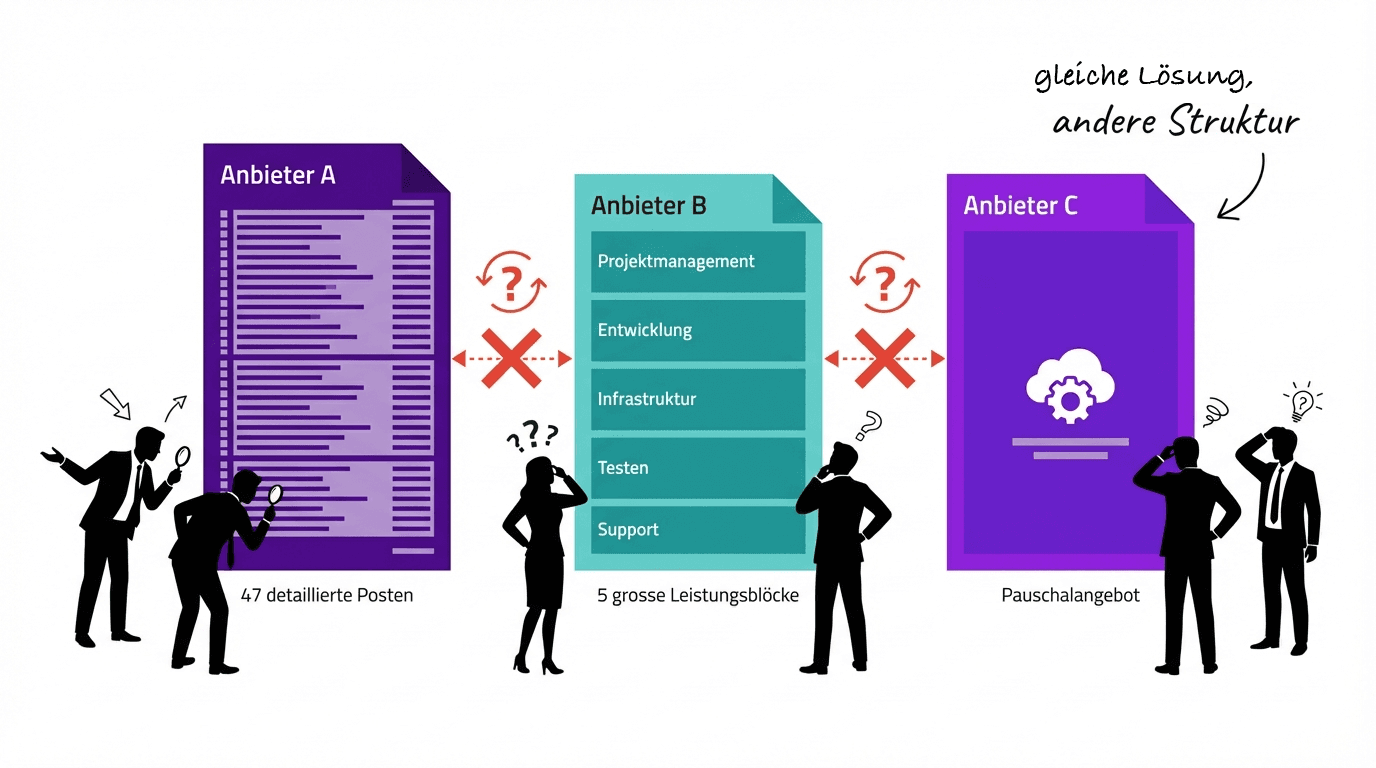
That’s not due to bad intentions. It’s the system. Every provider structures their proposal differently. Provider A lists 47 line items, Provider B bundles everything into five blocks, Provider C makes a flat-rate offer. Unless you ask every provider for the same format, you’re comparing apples to oranges.
Then there are vague service descriptions. “Project management included” can mean a project manager invests four hours per week. Or that someone sits in a status meeting pro forma. Without hours, frequency, or deliverables, that line is worthless.
And then there are first-year prices. The first year is almost always cheap. Migration discount, introductory offer, “partner price.” From year two onward, the regular rate applies. SaaS providers raise their prices by an average of 8–12% per year. If you don’t factor that in, you’ll price yourself into trouble.
Seven places where the money is hidden
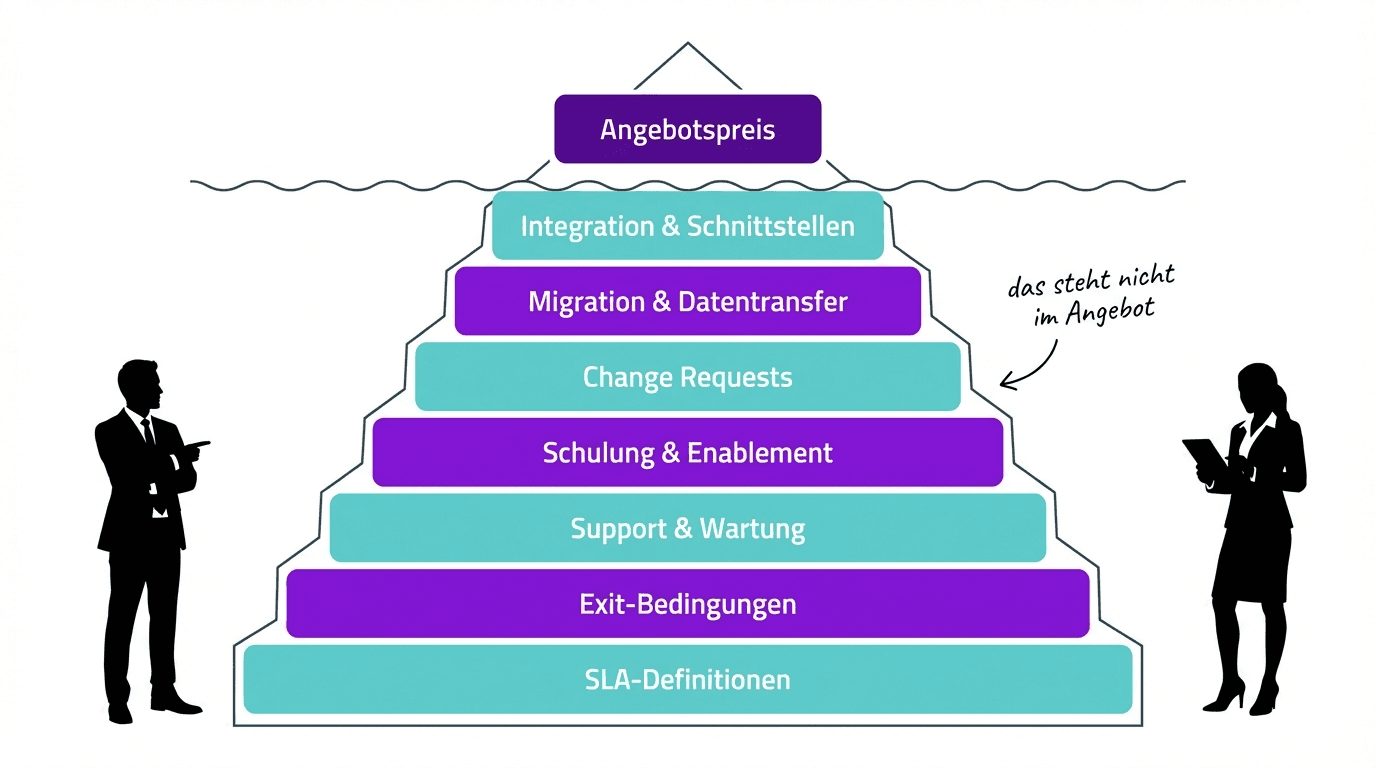
In almost every IT proposal we assess, we find the same gaps. Here are the seven most common.
1. Integration and interfaces
The proposal covers the software. But how does it get into your existing environment? Interfaces to ERP, CRM, identity management are rarely quantified in the initial proposal. We regularly see integration costs amounting to 30–50% of the software price.
2. Migration and data transfer
“Data migration” appears in the proposal. But which data? At what quality level? Who cleans it, who tests it? Migration is almost always more complex than planned and almost never fully priced in.
3. Change requests
The proposal defines a scope. Anything outside it costs extra. The daily rates for this are often 30–50% above regular project rates.
4. Training and enablement
“Training included” can be a two-day workshop for five people. Or a PDF. The range is enormous.
5. Support and maintenance after go-live
Support costs of 15–22% of the license price per year are common. Sometimes they’re in the fine print, sometimes nowhere.
6. Exit terms
What happens if you want to switch providers? Do you get your data in a usable format? Most proposals are completely silent on this.
7. SLA definitions
“99.9% availability” sounds like a lot. But that’s 8.7 hours of downtime per year. Without clear answers, an SLA is just a marketing promise.
The checklist we use for every evaluation
You don’t have to be a procurement specialist. You just need to ask the right questions.
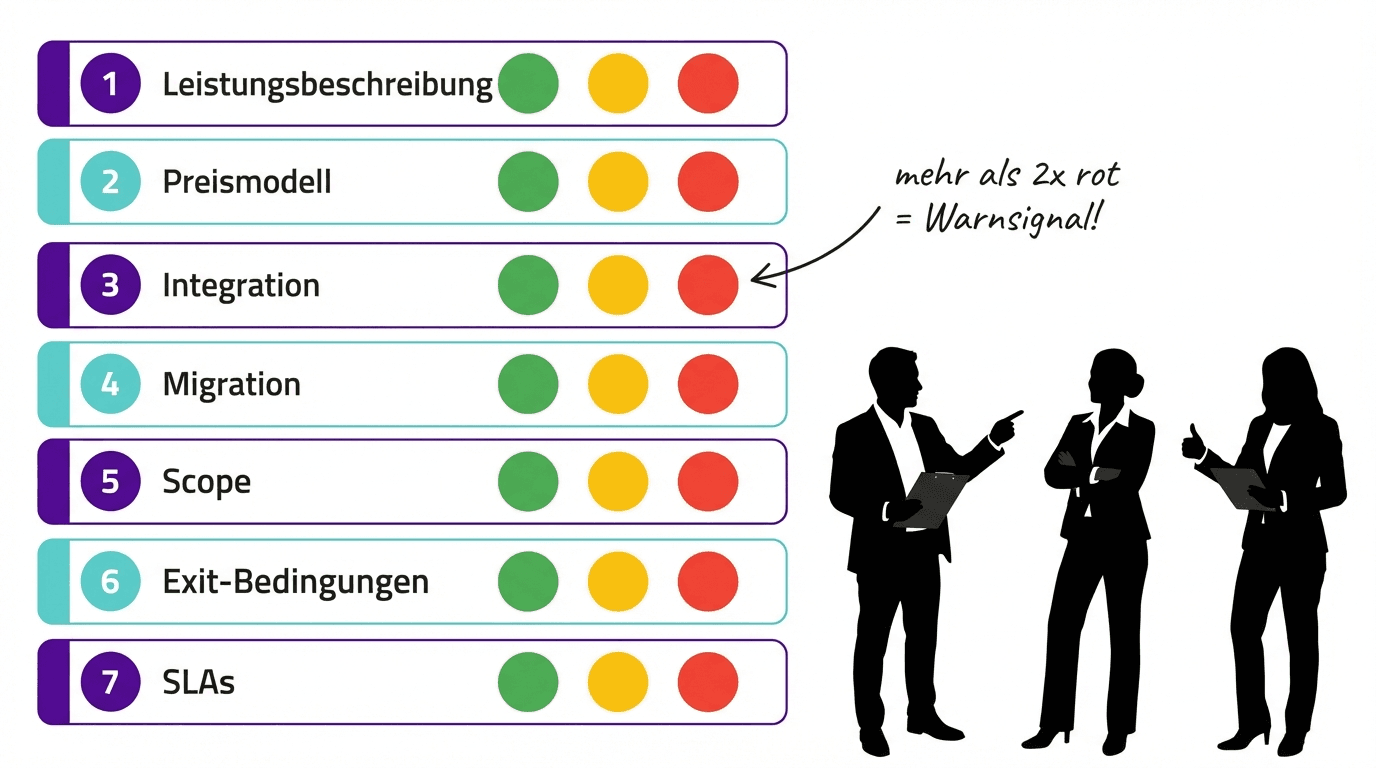
Service description: Are all services defined with hours, frequency, and deliverables?
Pricing model: What is included in the price, what costs extra? Are there price adjustment clauses?
Integration: Are interfaces to existing systems taken into account?
Migration: Is the effort realistic?
Scope: What is included, what is not? What does a change request cost?
Exit: Notice periods, data portability, transition support.
SLAs: Measurement methodology, consequences, exceptions.
If a provider remains vague on more than two points, expect surprises in year two.
The process decides, not the checklist
Even with the right questions, it happens: management sees a demo, gets excited, and the decision is made emotionally. Recognizing a good IT proposal is only half the work. You also need an evaluation process that separates emotions from facts.
Bottom line
Before you sign the next IT proposal, take 30 minutes and go through the seven points. Ask the uncomfortable questions, demand the missing information. Vendor-neutral, without commission, with a clear methodology.