You've solved the speed problem. Now you have a traffic jam problem
Imagine the moment it clicks. You no longer have one assistant helping you with a single task. You have five agents working on eight topics simultaneously. One is doing research, one is writing code, one is answering tickets, one is building reports. Suddenly, work is generated faster than you ever thought possible.
And then something unexpected happens. It doesn't get faster. It gets slow.
Drafts pile up. Code waits for review. The customer reply is sitting with you for approval. Each agent completed their part in minutes, but nothing goes out before a human has looked at it. And that human is you.
You wanted to speed up the machines. Instead, you've become the bottleneck yourself.
You are the bottleneck, and that's not a mistake at first
Before you try to optimize this bottleneck away, it is worth asking an uncomfortable question: What does your review actually do?
It catches errors before they cause damage. It prevents small inaccuracies from snowballing into major problems. It is the point where someone with context and responsibility says: This goes out, that doesn't. Your review is a quality assurance mechanism, not a bureaucratic hurdle.
This is precisely why the obvious solution is the most dangerous one. When the traffic jam grows, the first reaction is almost always: check faster, or check less. Both remove the mechanism without replacing it. You take away the safety net and hope that nothing falls.
In our experience, things do fall.
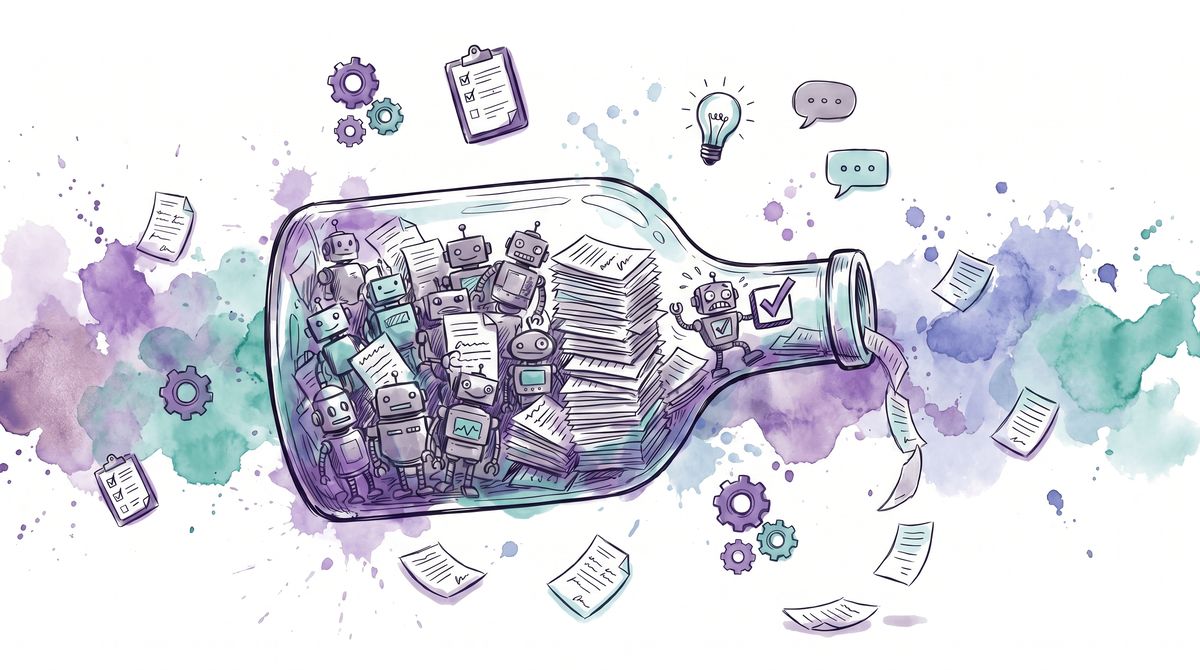
Figure: Multiple agents produce in parallel, but the entire output in the end must go through a single review point.
Checking faster is the wrong answer
There is a simple reason why you can't just review your way out of a bottleneck: Reviewing is often more tedious than producing.
A 2026 Sonar survey among developers demonstrates this clearly. 96 percent do not fully trust AI-generated code, but only 48 percent review it every time. 38 percent say that reviewing AI output requires more effort than reviewing human work. And 61 percent report that AI produces code that looks correct, but isn't. (Source: Sonar, 2026)
This gap between distrust and actual review has a name: the verification gap. And it doesn't just affect code. Wherever agents deliver plausible-sounding results, honest reviewing becomes more exhausting the more of it comes in.
When pressure rises, the predictable happens. You wave things through. You skim instead of reading. The review still exists on paper, but it no longer accomplishes what it was meant to do. In April 2026, the MIT Technology Review described exactly this pattern: "Human in the Loop" can become an illusion if a human formally approves things but no longer has the context to make a meaningful judgement. Oversight that only exists on paper. (Source: MIT Technology Review, 2026)
You then end up with the worst of both worlds: the traffic jam of a human bottleneck and the quality of no review at all.
Shift the human from the output to the gate
This is where the real misconception lies. The problem is not a speed problem. It is a placement problem.
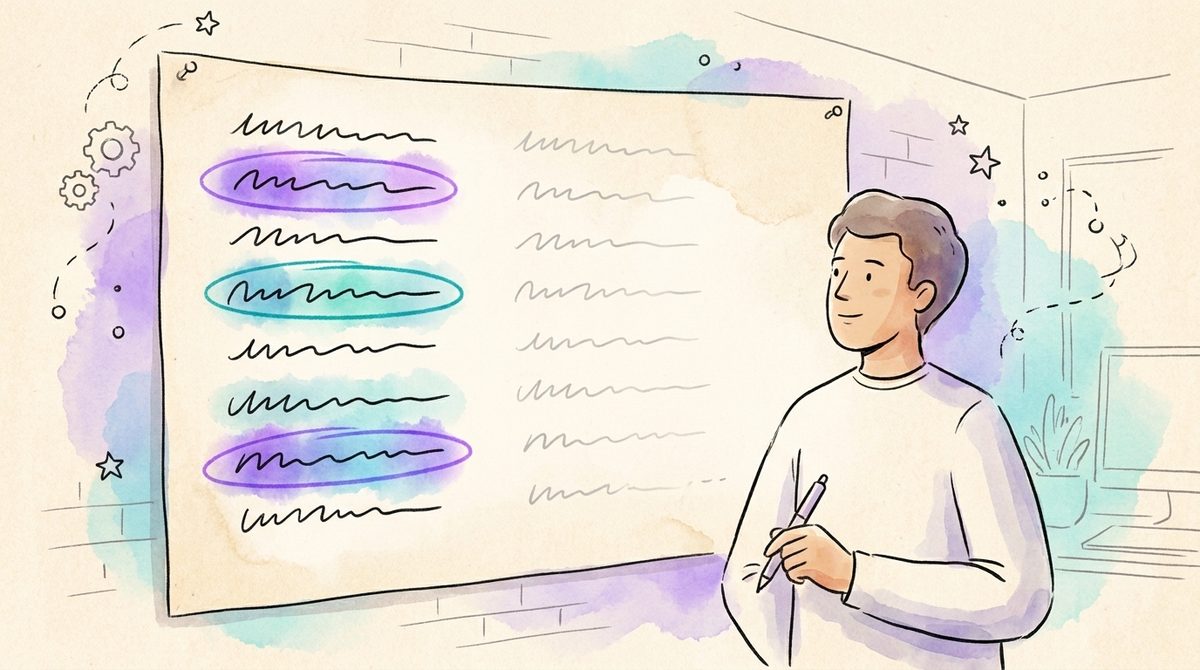
As long as you sit at every single output, you are reviewing symptoms. You assess result number 4,000, then number 4,001, without your attention ever changing anything fundamental. This is called "Human in the Loop": The human is in every loop, at every step.
The alternative is "Human on the Loop." Here, the human stands above the process, not inside it. You no longer review every output; instead, you design the rules by which outputs are created, you observe the whole, and you step in when something violates the rules.
You stop being the inspector on the assembly line and become the one who builds the assembly line.
For this to work, you need something that takes over the work of your review without you having to look yourself. That something is Quality Gates.
Quality Gates: the rules that take your place
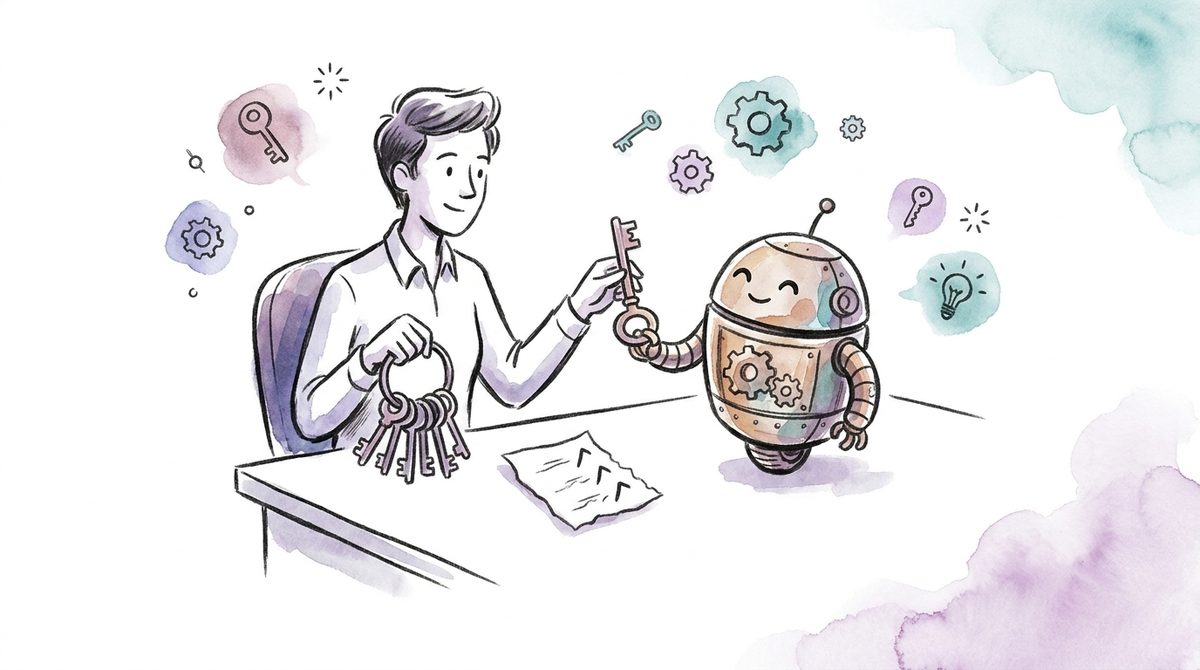
A quality gate is a clearly defined condition that an agent must meet before its output can move forward. If it meets it, the work flows through autonomously. If it doesn't, it is stopped or escalated to you. The gate does the checking so you don't have to.
A quality gate does not replace your judgment. It solidifies your judgment in rules in advance, instead of you having to apply it anew to every single output. The teams where this works show five distinct patterns.
These teams treat autonomy as a slider, not a switch. Based on the NIST AI Risk Management Framework, the Cloud Security Alliance described a profile with tiered levels of autonomy, from fully monitored to high autonomy. (Source: Cloud Security Alliance, 2026) The agent writing internal drafts sits on a different tier than the one moving money or talking to customers. Anyone who mixes the two ends up checking either too much or too little.
For them, risk dictates the gate. The question is not how difficult a task is, but what happens if it goes wrong. Low-risk and easily reversible tasks run autonomously, such as formatting or an internal draft that someone else will use anyway. Anything that goes external, costs money, or cannot be undone goes behind a gate. Most teams gate based on effort, yet it's the consequences that matter.
The gate criteria are formulated in a verifiable way. "All tests green, no secrets in code, sources linked" is a gate. "Looks okay" is not. The difference determines whether a machine can handle the verification or if a human needs to look at it again. This is precisely where most routine work disappears from your desk.
They plan for escalation from the start. A gate that only knows "yes" or "no" pushes doubts back to you unsorted. A good gate knows where a doubtful case goes and with what context. This ensures that only what truly requires human judgment lands on your desk.
Trust grows with data. New agents start closely monitored, with frequent approvals. Every correction, every caught error is a data point. If an agent proves its reliability over weeks, its gate moves up, away from routine reviews towards key decisions. Trust must be earned by an agent.
Figure: Autonomy as a slider. As trust grows, human intervention shifts from every step to handling exceptions.
What actually changes as a result
Humans do not disappear from the loop. That would be the error from the beginning, the quality mechanism gone without replacement.
The real gain: Your judgment scales. Instead of spending it on output number 4,001, you invest it once into a gate that subsequently checks things thousands of times. You work on the system, not in the system. And you won't see the tricky cases less often, but rather more clearly, because they no longer get lost in the noise of routine.
This is increasingly becoming a core competency. Gartner predicts that by 2029, around 70 percent of enterprises will use agentic AI in IT operations, up from less than 5 percent in 2025. (Source: Gartner) In this world, the winners will be those who are better at defining what doesn't need to be checked in the first place.
The honest question at the end
Most teams ask the wrong question: How can I review faster?
The better question is: Which decisions do I actually need to make myself, and which have I only kept out of habit?
Which decisions a human must keep and which not is a governance question. We settle it in AI governance.
Your answer to this determines whether your agents are waiting on you, or working for you.